
|
3 Obelisks in the British Museum
|
|
|
| Present Site: | Great Russell Street, London N 51°31'09.9" (51.51942) W 0°07'37.0" (-0.126946) |
| Pharaoh: | Nectanebo II (Late Period, The 30th dynasty, Reigned B.C. 4 Century) |
| Measurement: | 2.74 meters high |
| Pharaoh: | Hatshepsut (New Kingdom 18th Dynasty, Reigned B.C. 15 Century) |
| Measurement: | 1.65 meters high |
About the Site:
The British Museum is one of the greatest museum in the World, has more than 8 million colletions, has opened in 18 Century. The current building completed in 1847, and after the British Library was saparated in 1997, the buildind was largely renovated, and the "Great Court" (museum's inner courtyard covered by glass and frame) completed in 2000.
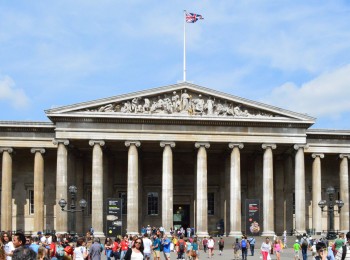 Facade of the Museum Facade of the Museum
|
How to Get There:
The Museum is in the center of London, but no underground station close to the museum. Although there are 4 stations: Russell Square, Goodge Street, Tottenham Court Road, and Holborn, but I would recommend Tottenham Court Road (Northern Line, Central Line), or Holborn (Central Line, Piccadilly Line) for the main entrance of the museum, about 300 meters by walk from the stations.
About the Obelisk:
Three (3) obelisks of Ancient Egypy and two (2) obelisks of Ancient Assyria are exibited in the Museum.
Among three (3), two (2) are in the Great Court, along the wall of both side, that were made by King Nectanebo II. Another one (1) obelisk is in Room 65 (Sudan, Egypt and Nubia) on the Upper Level, that was made by Queeen Hatshepsut.
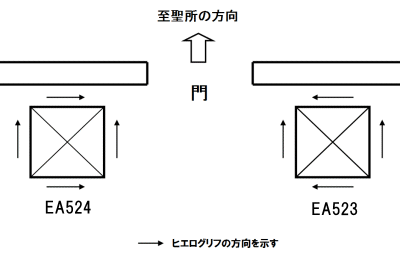 Estimated placement plan of Nectanebo II Obelisks |
● Nectanebo II Obelisks
Both were made by Nectanebo II (Late Period, The 30th dynasty, Reigned B.C. 360-343). The black siltstone (a kind of sedimentary rocks) is unusually used for these.
One (British Museum Collection EA523) was used as a material of fortress in Egypt, and found by British Tourlist in 1737, and another one (British Museum Collection EA524) was found at the same site by Danish mathematician in 1762. Both were carried to Alexamdria for transportation to France, but were captured with another antiquities such as famous "Rosetta Stone" by British Army since French Troops withdrew from Egypt.
It's uncertain for which temple these obelisks were erected because these were already carried into Cairo when they were discovered. But according to the explanation by the British Museum, the inscription of these obelisks says; these obelisks were dedicated to Thoth, the main god of Hermopolis [Ancient town along the Nile, about 250 km south of Cairo]. If so, these obelisks might be erected for the temple in Hermopolis.
The top of these obelisks are missing, and both are currently 2.74 meters high. The museum estimates it was originally about 5.5 meters high. The top portions are kept in the Egyptian Museum in Cairo, but not publicly exhibited.
The cartouche of coronation name and birth name of Nectanebo II are inscribed on the obelisk. Since the same textes are inscribed, we can assume both EA523 and A524 must be a pair. North face and south faces have, and west and east faces have same texts.
Because the cartouche is usually facing the gate (facing to the center) and facing the 至聖所 (facing to the back), although I cannot definitely say since the upper portions are missing, but if the cartouche are facing the front, EA523 were right side of the gate and A524 were left side.
Reference: the Explanation by the British Museum
British Museum Collection EA523
This is exhibited at left side (Southwest Corner) of the Great Court entering from the main entrance.

North Side |
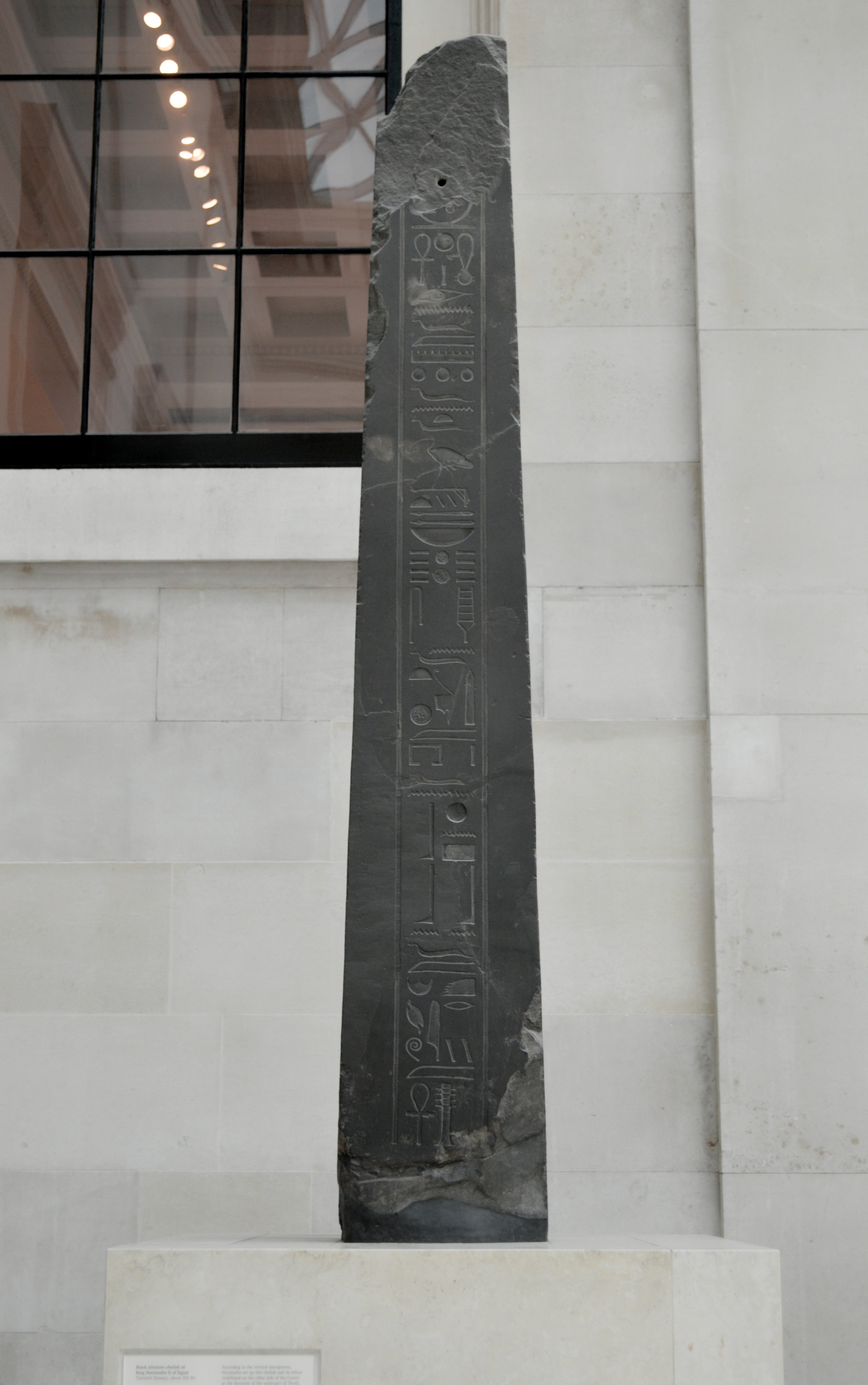
East Side |
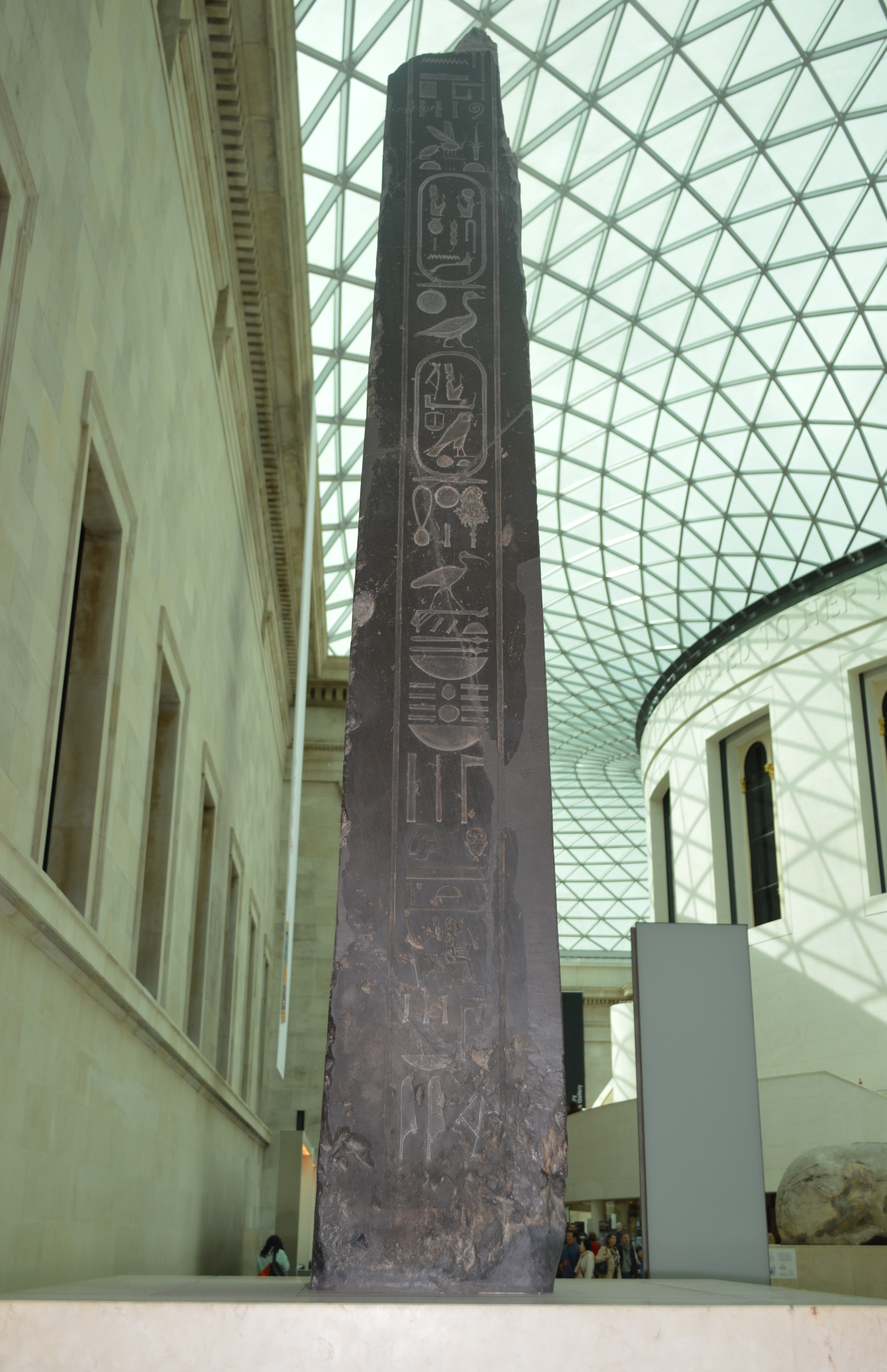
South Side |
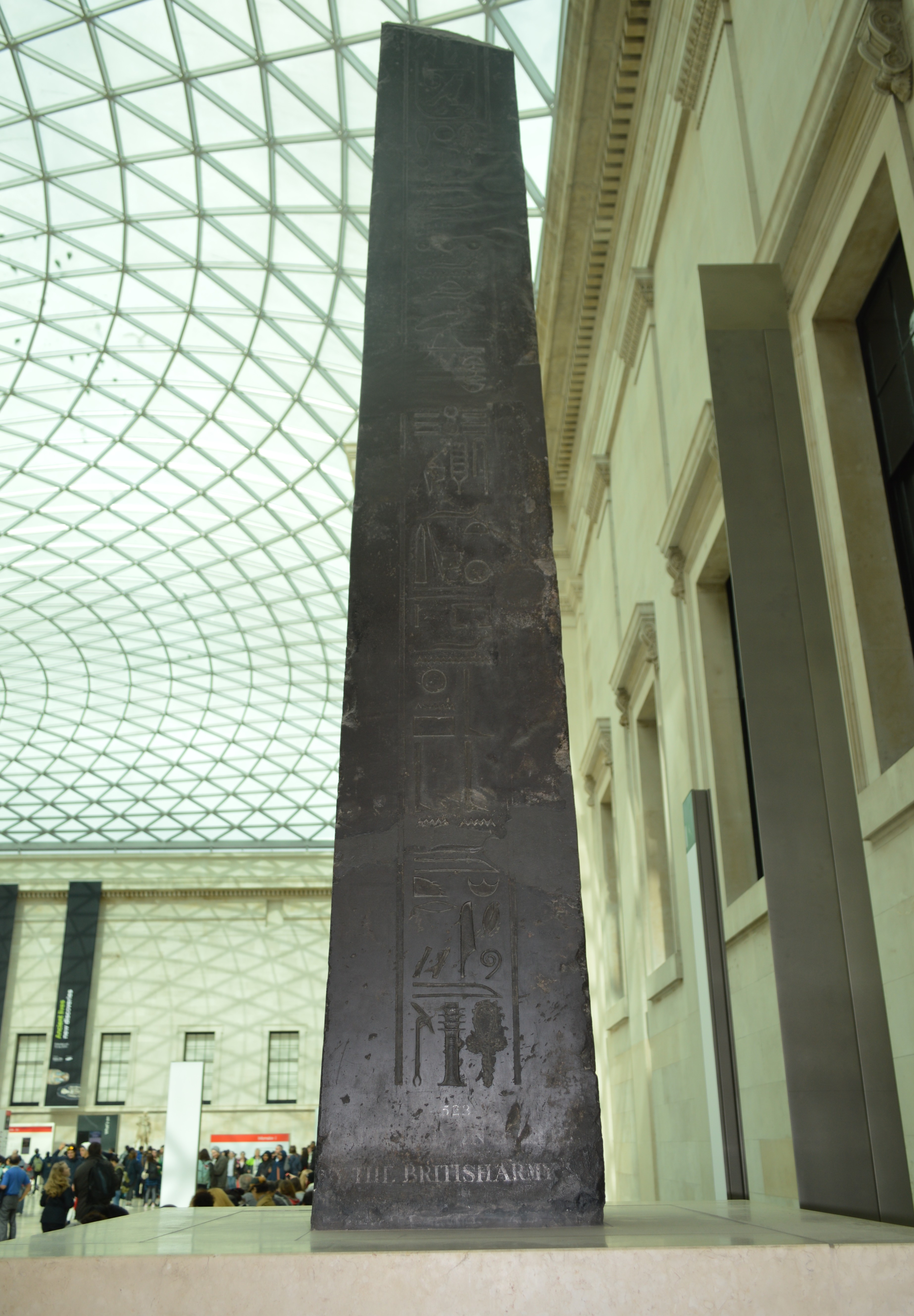
West Side |
|||
August 2, 2014 for North and East sides, May 6, 2015 for South and West sides by Hiroyuki Nagase (For high definition image, please click the picture) | ||||||
British Museum Collection EA524
This is exhibited at right side (Northeast Corner) of the Great Court entering from the main entrance.
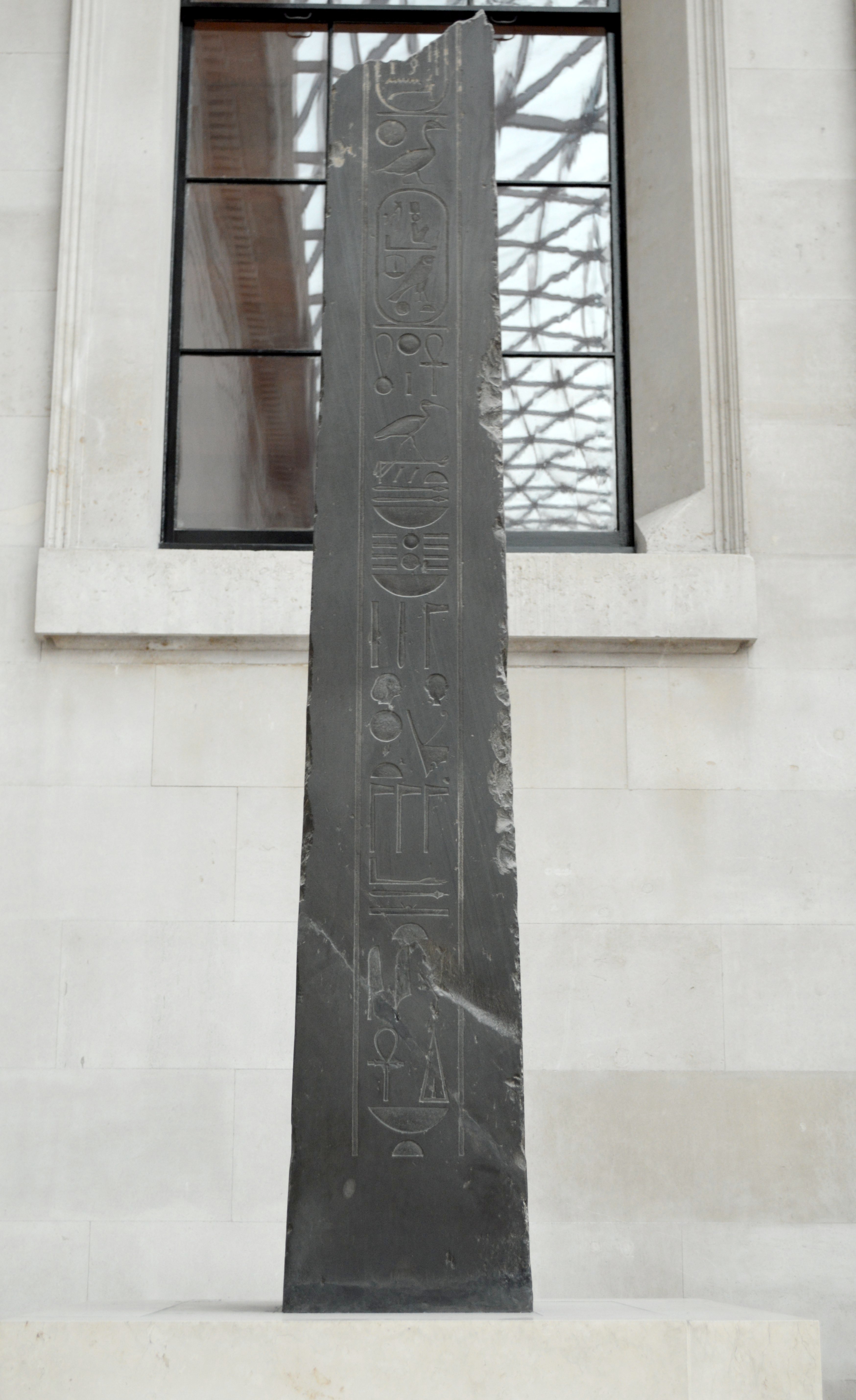
North Side |
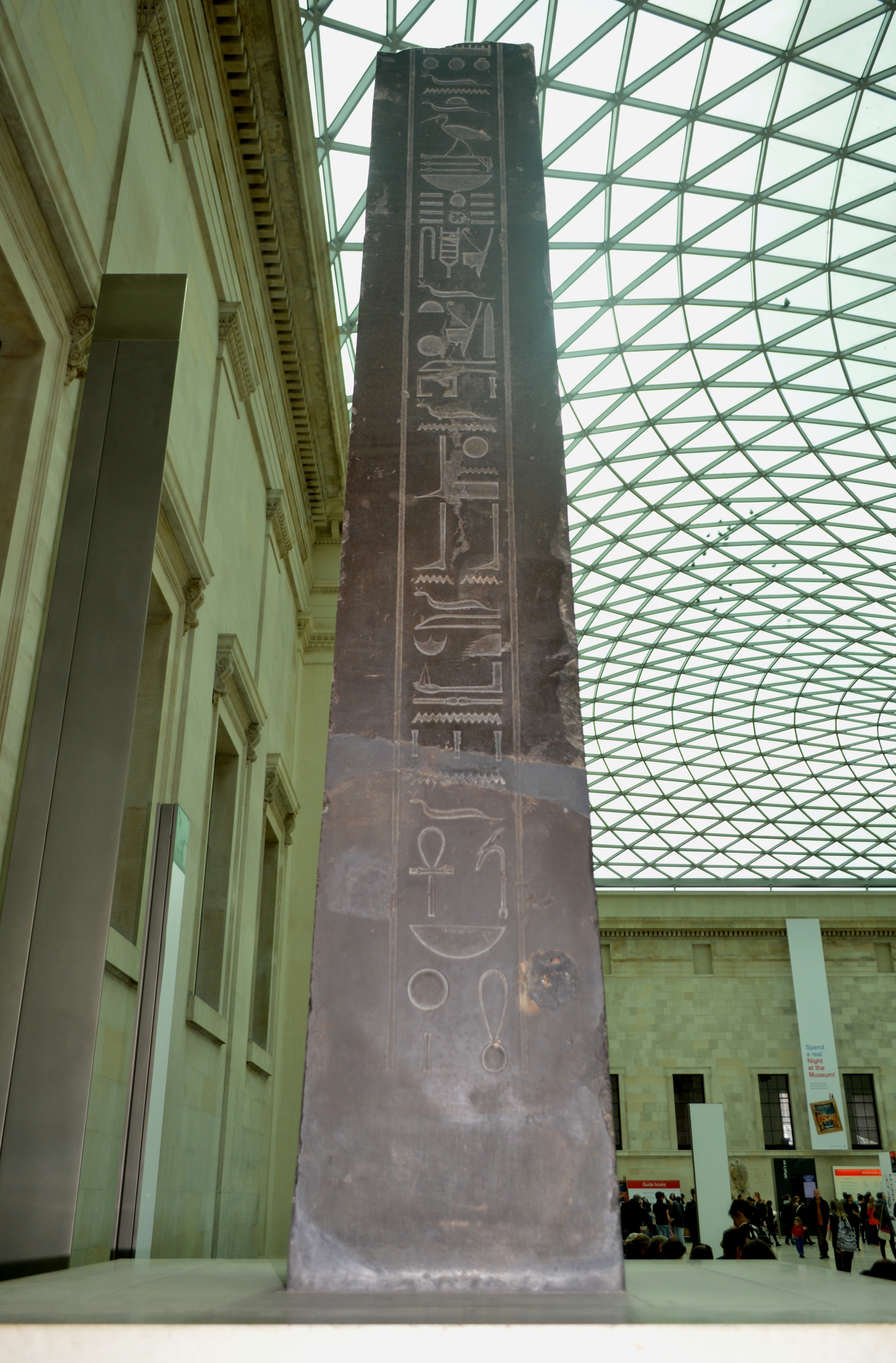
East Side |
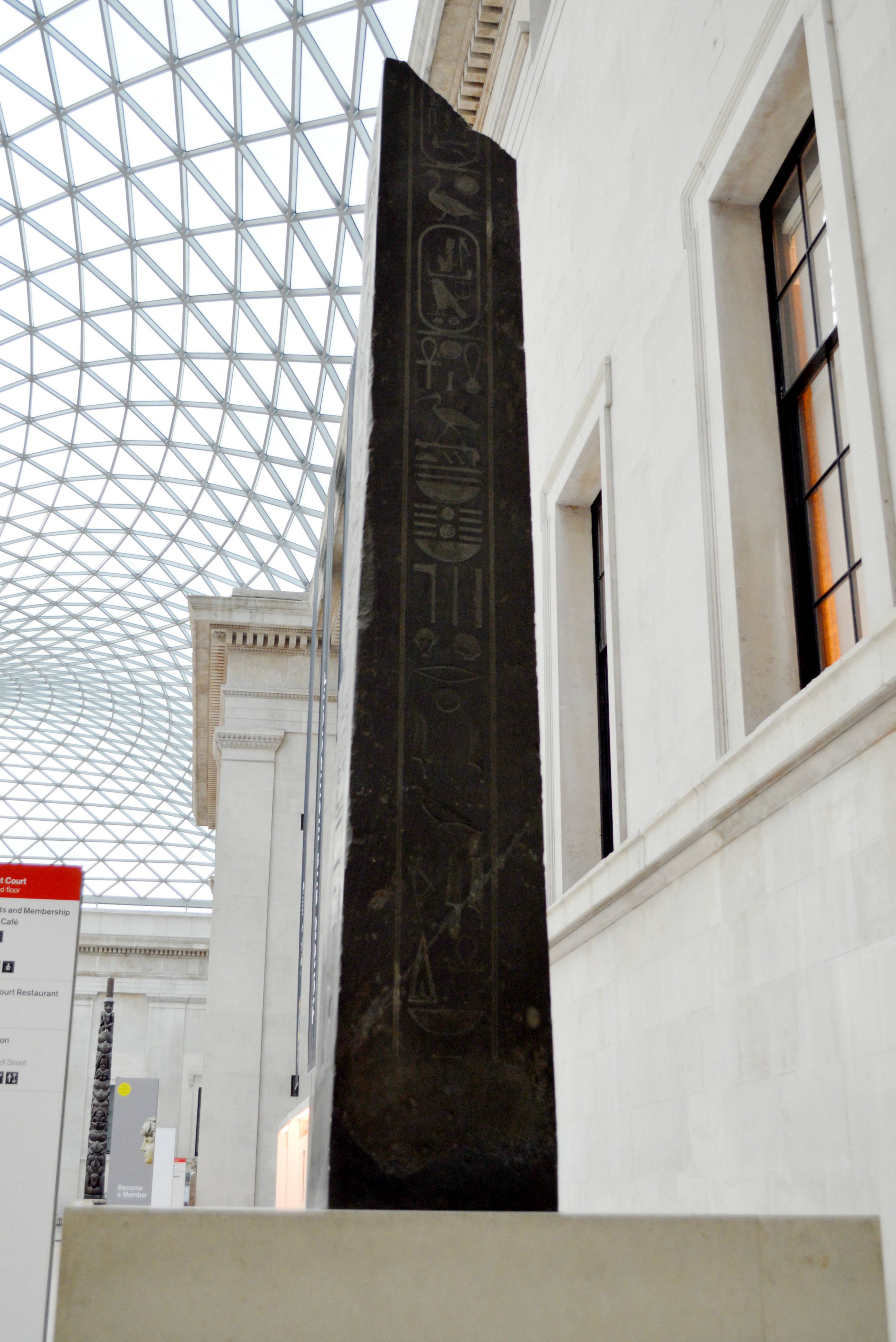
South Side |
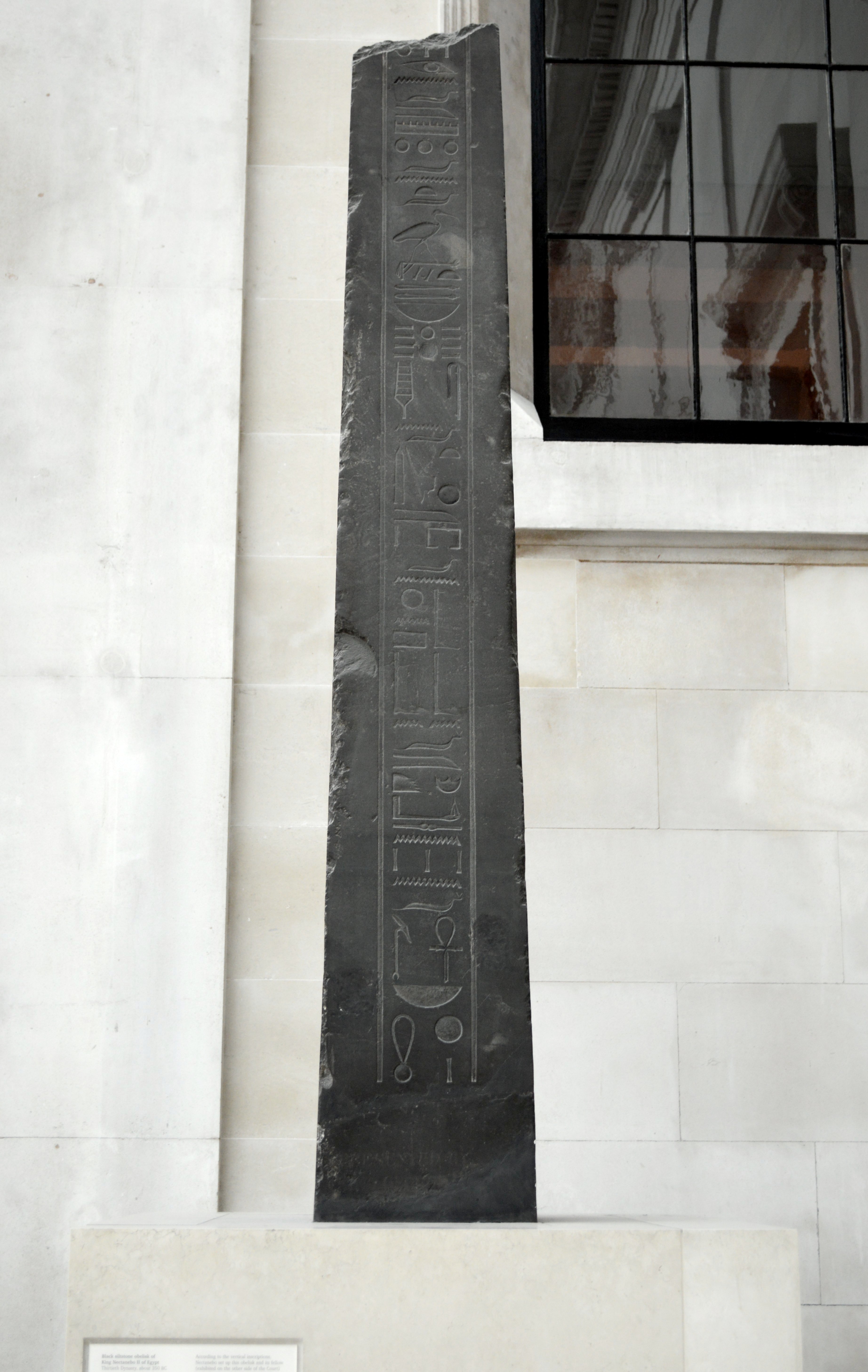
West Side |
|||
August 2, 2014 (East Side: May 6, 2015) by Hiroyuki Nagase (For high definition image, please click the picture) | ||||||
● Hatshepsut Obelisk
I saw this obelisk in May 2015 when I revisied the Museum, although I overlooked it in Summer 2014. Room 65 on the Upper Level is a exhibition room for the unearthed articles from Sudan, Egypt and Nubia, and the obelisk is displayed with many other stone monuments.
According to the Museum's website, 、このオベリスクは現在ではアスワン・ハイ・ダムの完成によって、ナセル湖の島となってしまったクァーサル・イブリムの遺跡で出土したもののようですが、ほかの場所から持ち込まれた可能性もあると書かれています。The obelisk is mabe by red granite with 1.65 meters high.
The inscription is engraved only on the front face, but the hieroglyph is unreadable due to the poor status of preservation.
The explanation for the museum exibition says; 「ホルスに愛されし者。ミアムの王。ラーの如く永遠に生きる者」 but the name of Hatshepsut seems to have deleted later.
なお、ミアムは現在のアニバ(Aniba)に相当し、アスワンから250kmほど上流の第一急流と第二急流の間にあり、クァーサル・イブリムの対岸にあった街です。⇒ 岡本訳: ミアム is current Aniba, a town on the opposite side of クァーサル・イブリム, between 第一急流 and 第二急流 of Nile, about 250 km upstream from Aswan.
参考: 大英博物館のハトシェプスト女王のオベリスクについての説明文
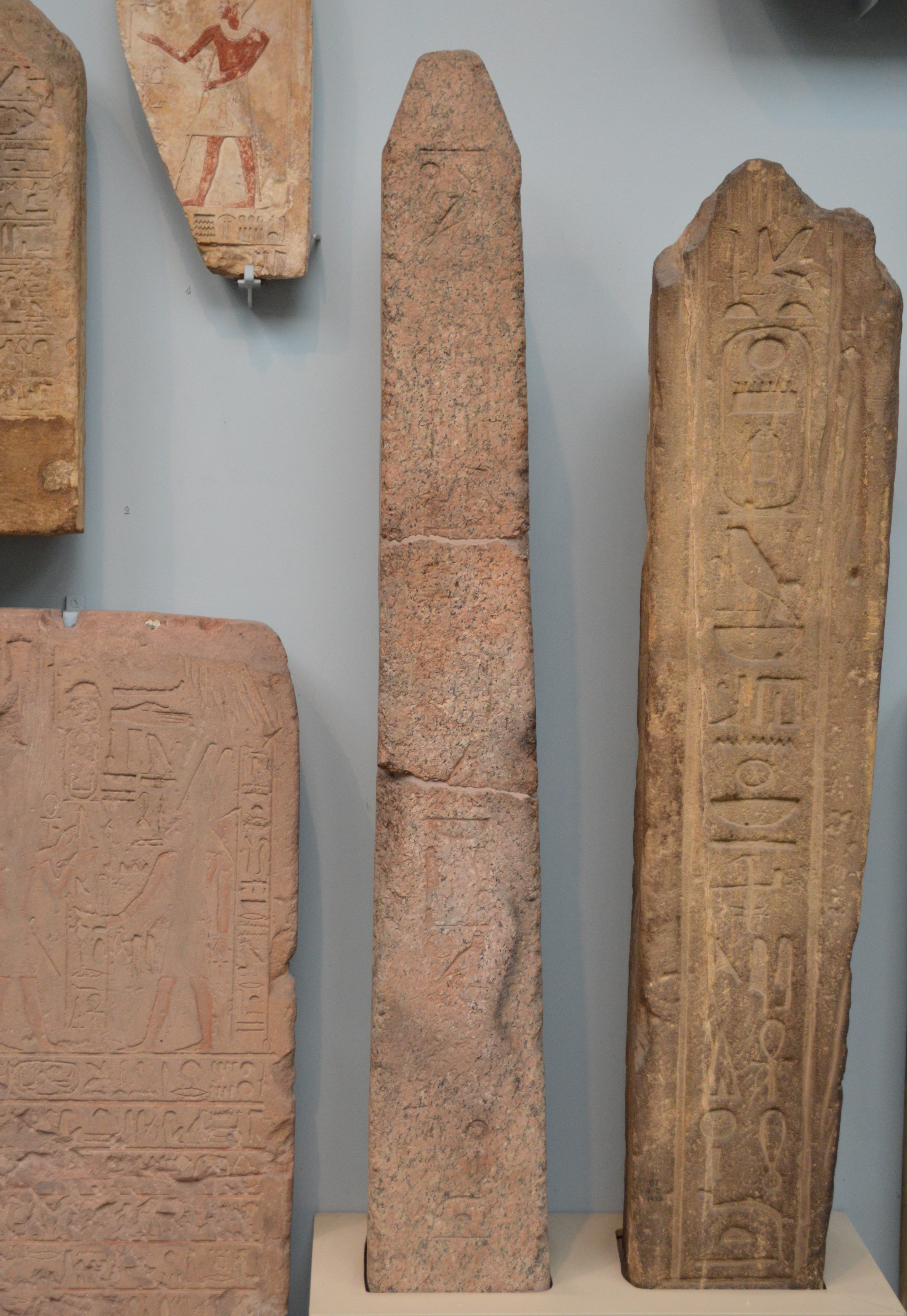
Front Side |
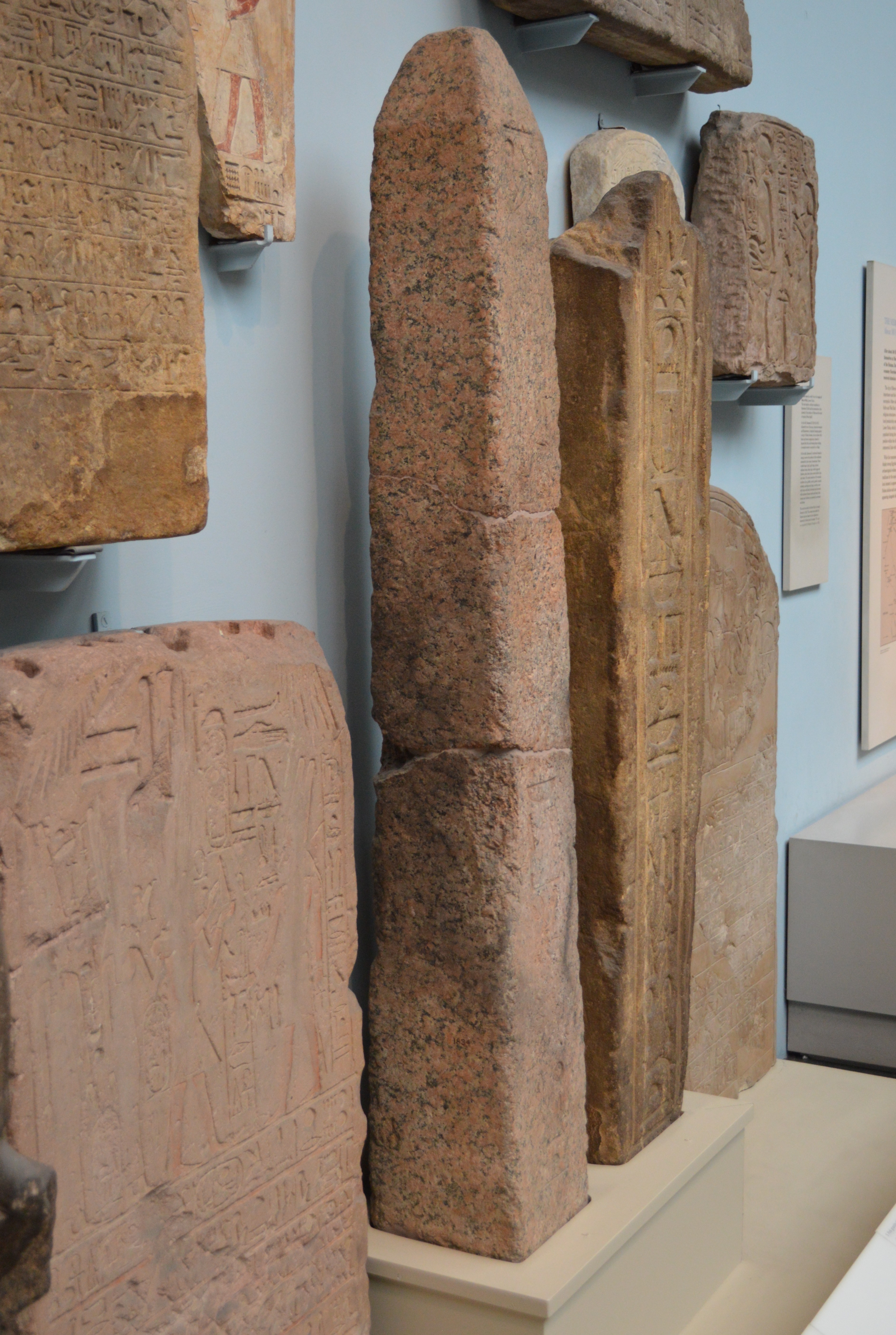
Left Side |
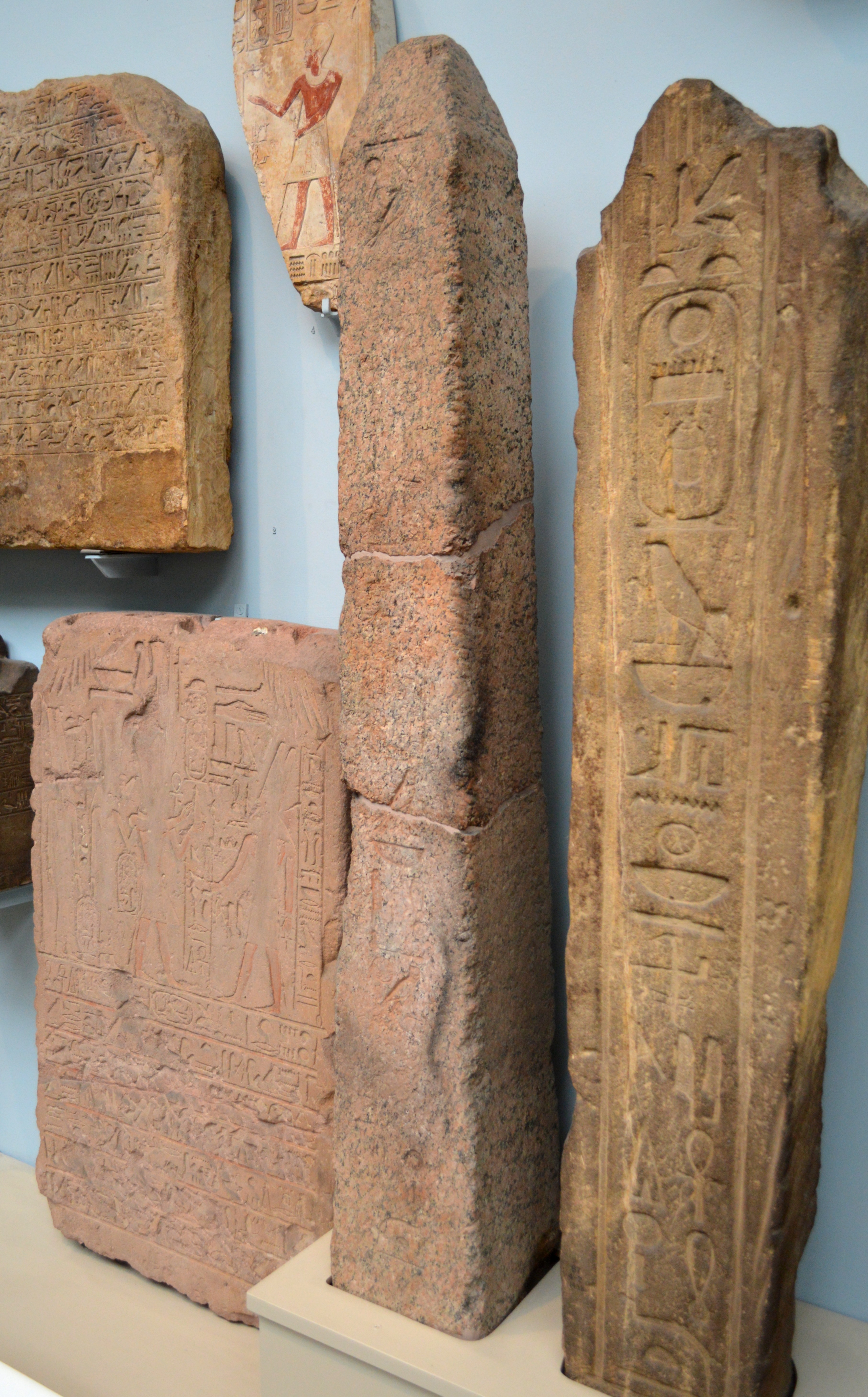
Right Side |
||
May 6, 2015 by Hiroyuki Nagase (For high definition image, please click the picture) | ||||
● [Appendix] Assyrian Obelisk
Among five (5) obelisks in the British Museum, this would be the most wellknown, as a "Black Obelisk".
Wikipedia has a pege for this Black Obelisk.
This was originally erected in 825 BC by Shalmaneser III, a king of Assyria [reigned 858-824 BC], and discovered in 1846 from underground of Nimrud (ancient Kalhu, Northern Iraq). This is 1.98 meters high, and has cuneiform inscriptions and the relief illustrated Jehu, King of Israel who is contributing to King Shalmaneser, and contributed animals.
Next to the "Black Obelisk", "White Obelisk" is also exibited. This was discovered in 1853, and is 2.84 meters high. Accoring to the Museum, the inscription may not have completed, and most are unreadable. The name of Ashurnasirpal is inscribed, but the researchers are still discussing whether Ashurnasirpal I [reigned 1050-1031 BC] or Ashurnasirpal II [reigned 883-859 BC].
Reference: 大英博物館の黒色オベリスクについての説明文
Reference: 大英博物館の白色オベリスクについての説明文
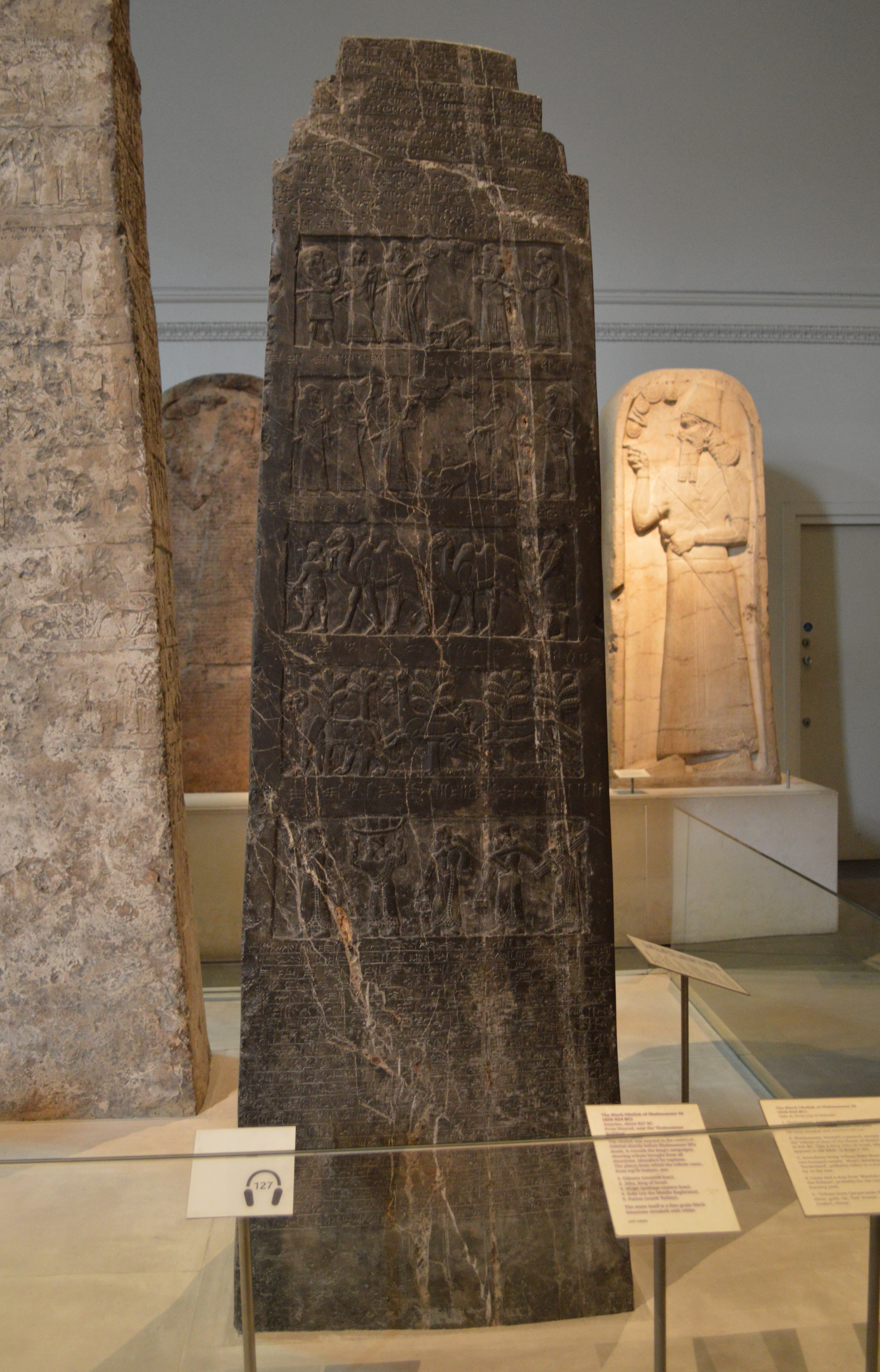 Black Obelisk |
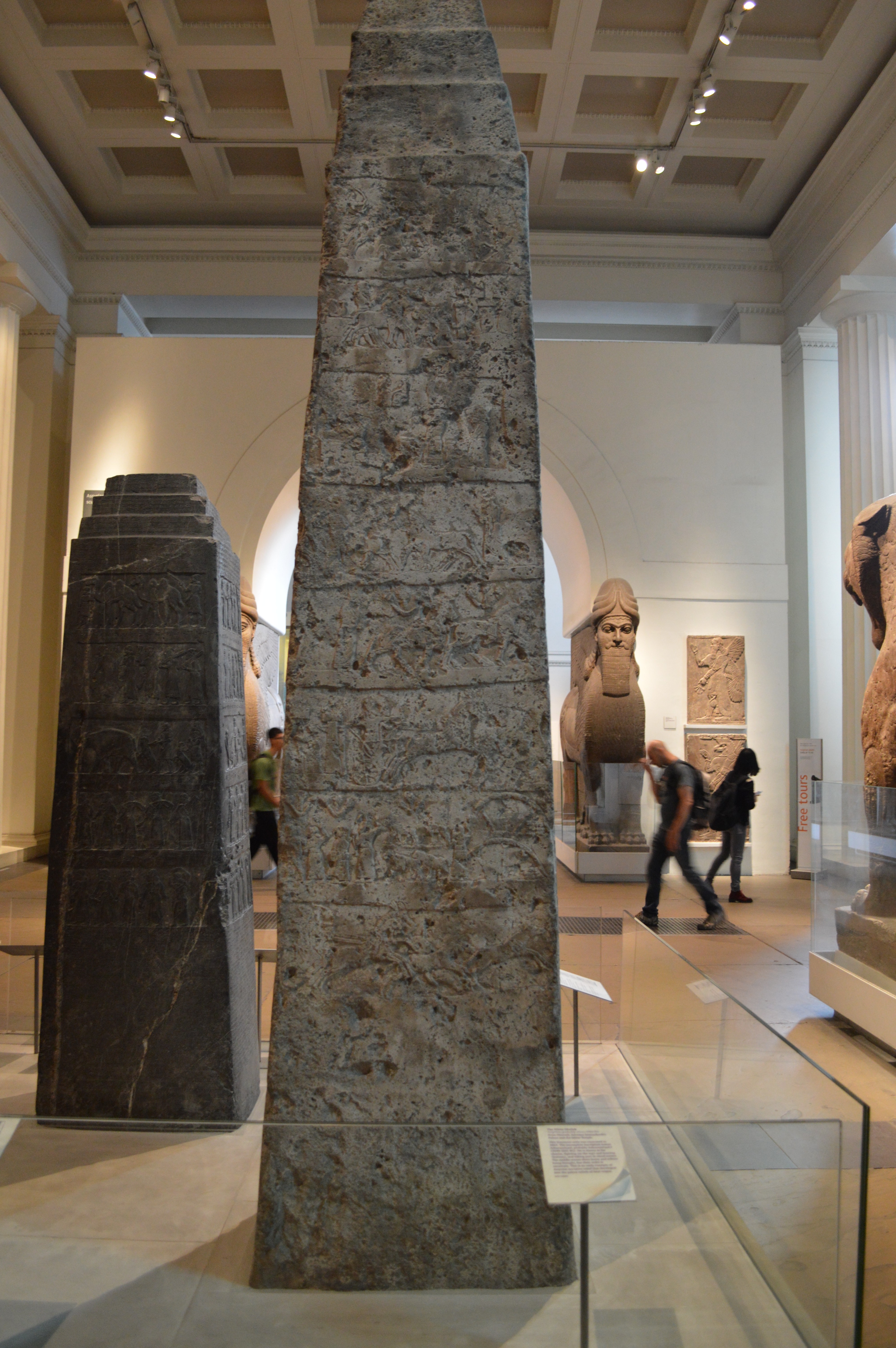 White Obelisk |
|
August 2, 2014 by Hiroyuki Nagase (For high definition image, please click the picture) | ||
Copyright Hiroyuki Nagase nagase@obelisk.org and Shoji Okamoto okamoto@obelisk.org
 : Underground Station