
|
Obelisk of El Alamein
|
|
|
| Present location: | In front of the Presidential Palace, El Alamein, Egypt Latitude: 30°53′10.8″ (30.886333) Longitude: 28°53′19.1″ (28.888639) |
| Pharaoh: | Ramses II (19th Dynasty, New Kingdom; reigned in the 13th century BC) |
| Height: | 20.4 metres |
| Material: | Red granite |
About the location:
El Alamein lies west of Alexandria and is best known as the site of battles between Axis and Allied forces during the Second World War. In recent years, El Alamein has been rapidly developed as a resort destination, and a Presidential Palace was built there in 2019. As the city stands on Egypt's northern Mediterranean coast, it is being developed as a summer retreat. In front of the Presidential Palace stands an obelisk of Ramses II that was relocated from Gezira Island (Zamalek) in Cairo.
However, when people hear of an “obelisk in El Alamein,” they are probably much more likely to think of the obelisk at the German war cemetery than of the ancient obelisk moved to the Presidential Palace. There are also far more online articles about the former, so care is needed to distinguish the two.
How to get there:
As of 2026, travelling to El Alamein is essentially a journey by car. When I visited in January 2025, a highway running north from Giza had been completed almost as far as El Alamein.
To give the conclusion first, a barricade and checkpoint stood more than one kilometre from the Presidential Palace, and I could not even approach it. Before leaving for Egypt, I had researched the area. Around 2020, there appeared to have been no particular restrictions: anyone could approach freely, and photographs of the palace and obelisk were available online. By the time of my visit, however, the situation had changed completely, and vehicles could not enter. Brand-new apartment buildings lined both sides of the road leading towards the palace, and in the distance along the coast I could see what appeared to be very tall hotel buildings. Yet there was hardly anyone in sight apart from construction workers. Development was in full swing, and the whole town felt like a construction site.
My impression is that around 2020 the palace may have been complete externally but still undergoing interior work, and might not yet have been functioning as a presidential palace. That could explain the absence of restrictions at the time. Once it came into actual use, however, maintaining security amid vacant buildings and construction sites would have been difficult. I thought that this might be why checkpoints had been established.
Nevertheless, my interpretation may be wrong, and circumstances may have changed further. A large resort hotel, Gewan Palace New Alamein, opened immediately north of the Presidential Palace in late April 2025. It had not yet opened when I was there in January, but one would expect it now to be possible to reach at least the vicinity of the palace on its northern side. After returning home, I also discovered that many hotels east of the Presidential Palace were already operating and that quite a few videos showed lively activity there. I had seen only the western part of New Alamein, which was still under construction, and had mistakenly concluded that the entire city was unfinished.
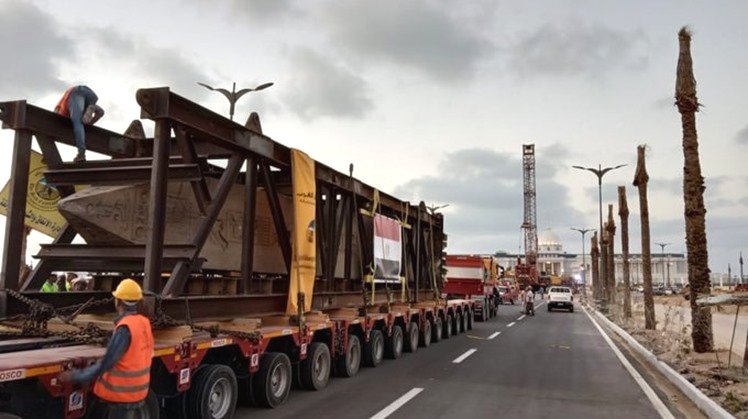 The obelisk being transported from Cairo to El Alamein (EGYPT FORWARD, August 8, 2019) |
About the obelisk:
Although I was unable to inspect the obelisk in person at its new location, I was able to confirm that the obelisk now standing in front of the Presidential Palace is the Ramses II obelisk formerly erected on Gezira Island (Zamalek) in Cairo. That obelisk had itself been reconstructed in 1961 from fragments found at the ruins of San El-Hagar (Tanis).
An article published by the Egyptian English-language website EGYPT FORWARD on August 8, 2019, includes a photograph of the obelisk in transit and explicitly states that it was being transported from Zamalek to El Alamein.
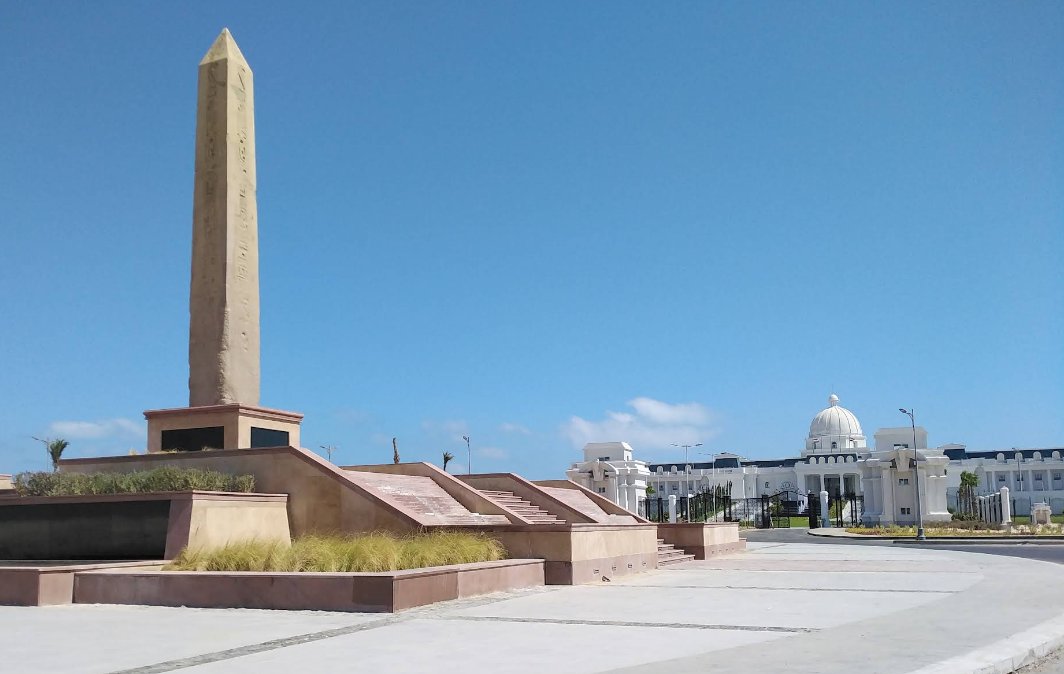 An example of a photograph shown on Google Maps of the obelisk in front of the Presidential Palace (August 2020) |
Unfortunately, the EGYPT FORWARD article does not specify where in El Alamein the obelisk was taken. In the background of the photograph, however, there is a building resembling the Presidential Palace. Numerous photographs of the obelisk standing in front of the palace are also available online; the accompanying image is one example.
Naturally, one would expect the Presidential Palace to be enclosed by fencing and to have a gate. What matters here is whether the obelisk stands inside or outside that fence. In this photograph, it appears to stand on a roundabout outside the fenced grounds. If so, it might be possible to walk to it from Gewan Palace New Alamein. Most of the photographs on Google Maps date from 2020–2021, but I also found one dated December 2025, which suggests that approaching it may now be possible.
The photographs of the four faces below were taken when the obelisk was still standing in Messalla Garden, Gezira Island (Zamalek), Cairo.
Notes on the visit:
The purpose of my January 2025 trip to Egypt was to update this website, and I had carried out research beforehand. Nevertheless, the obelisks beside the Opera House in the New Administrative Capital were behind a wall and almost impossible to see. The visit to the Presidential Palace in El Alamein was an even greater disappointment: after a two-hour drive from Cairo, I was stopped by a barricade and checkpoint, making the journey entirely fruitless. Egypt's modernization is proceeding at such a rapid pace that information only a few years old can quickly become outdated. I hope to stay at Gewan Palace New Alamein, adjacent to the north side of the Presidential Palace, when I return to Egypt in 2027. Will I finally be able to visit the obelisk in front of the palace?
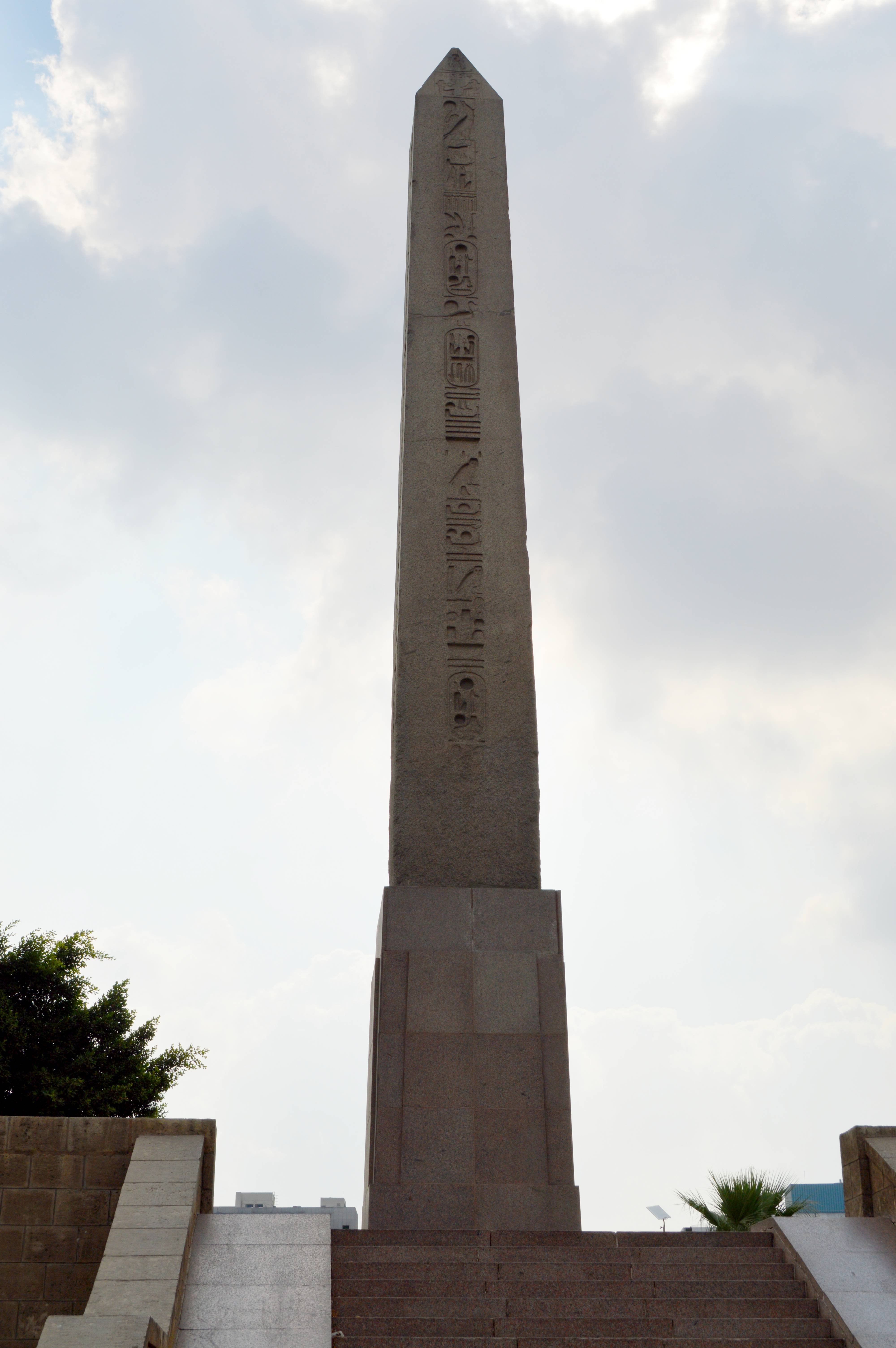 West face | 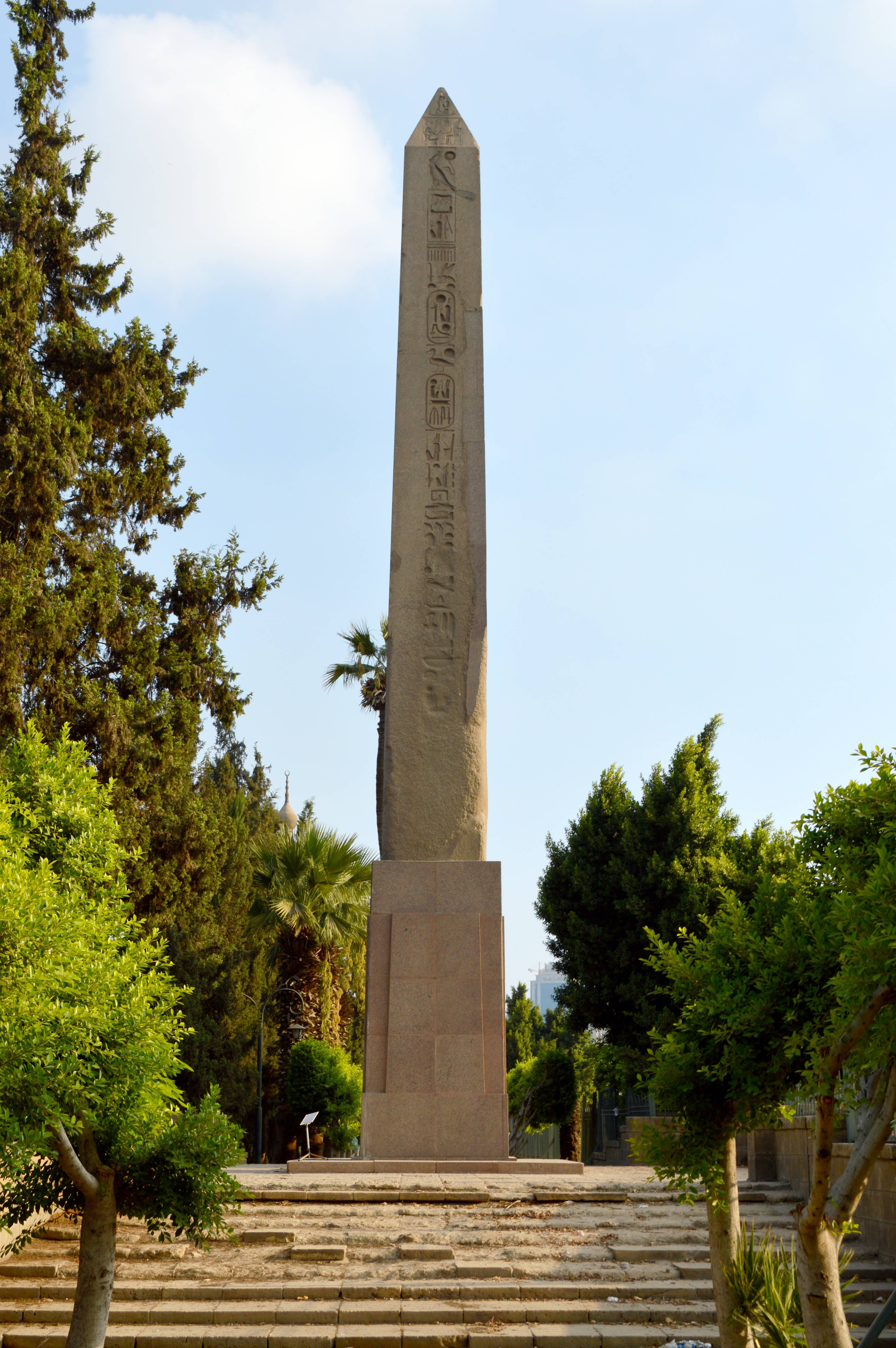 South face | 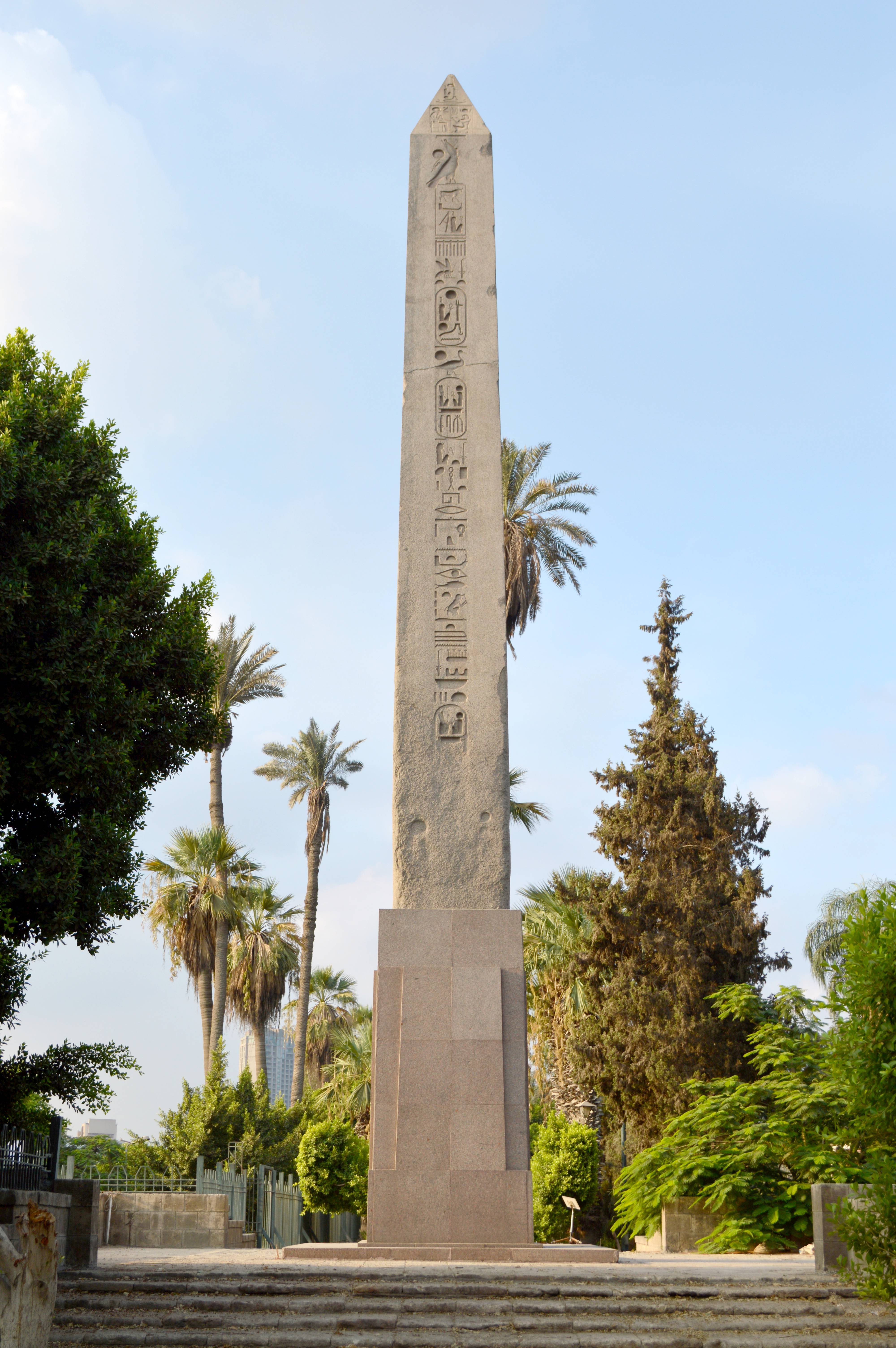 North face | 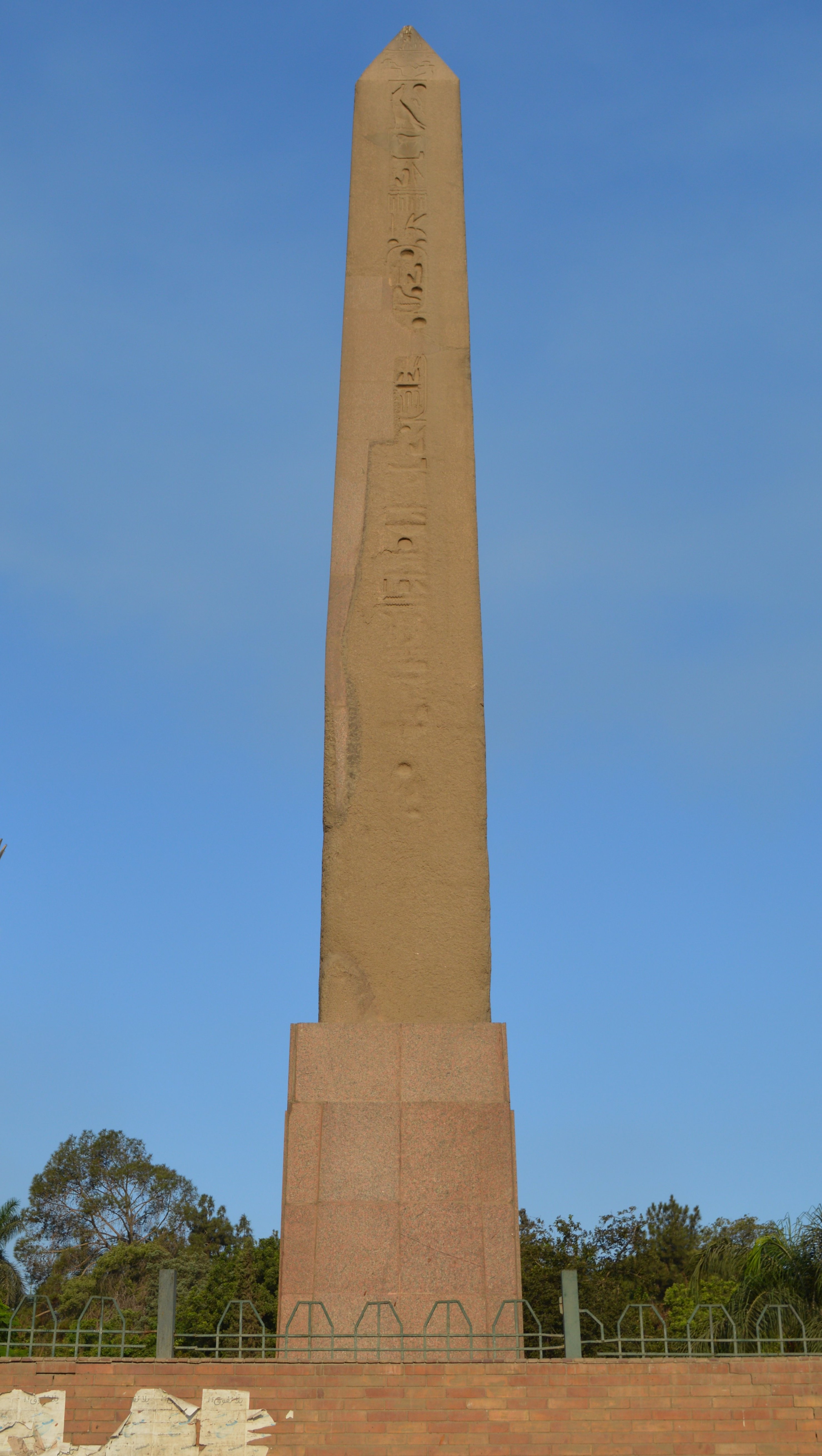 East face |
|||
Photographed when the obelisk stood on Gezira Island (Zamalek), Cairo. Photographs by Hiroyuki Nagase, August 4, 2014. Click each image to view the high-resolution original. | ||||||
Text and editing: Hiroyuki Nagase nagase@obelisks.org, Shoji Okamoto okamoto@obelisks.org