
|
Obelisks in the New Administrative Capital
|
|
|
| Location: | Egypt, New Administrative Capital, City of Art and Culture Latitude 30°00′54.8″ (30.015220) Longitude 31°43′21.1″ (31.722528) |
| Original builder: | Ramses II (19th Dynasty, New Kingdom; reigned in the 13th century BC) |
| Height: | Unknown |
| Material: | Unknown |
About the location:
The New Administrative Capital is a new city whose construction began in 2015, with financing that included loans from China. Development started in the desert about 40 km east of Cairo. When I visited in January 2025, the main government ministries and residential buildings for civil servants were under construction or nearing completion, but the relocation of government offices from Cairo had only just begun. Although many buildings themselves were complete, relatively few employees had moved in, and many appeared virtually unoccupied.
Within the New Administrative Capital is a district named the “City of Art and Culture,” containing an opera house, the Capital Library, and the Capital Museum. The opera house apparently hosts occasional performances, but public access to the museum is limited, and the library also appears not to be open to the public. What surprised me most during my visit was that the entire area was surrounded by a high wall. I could not even approach the buildings, including the opera house. At that time, it seemed that full public access might still be some way off.
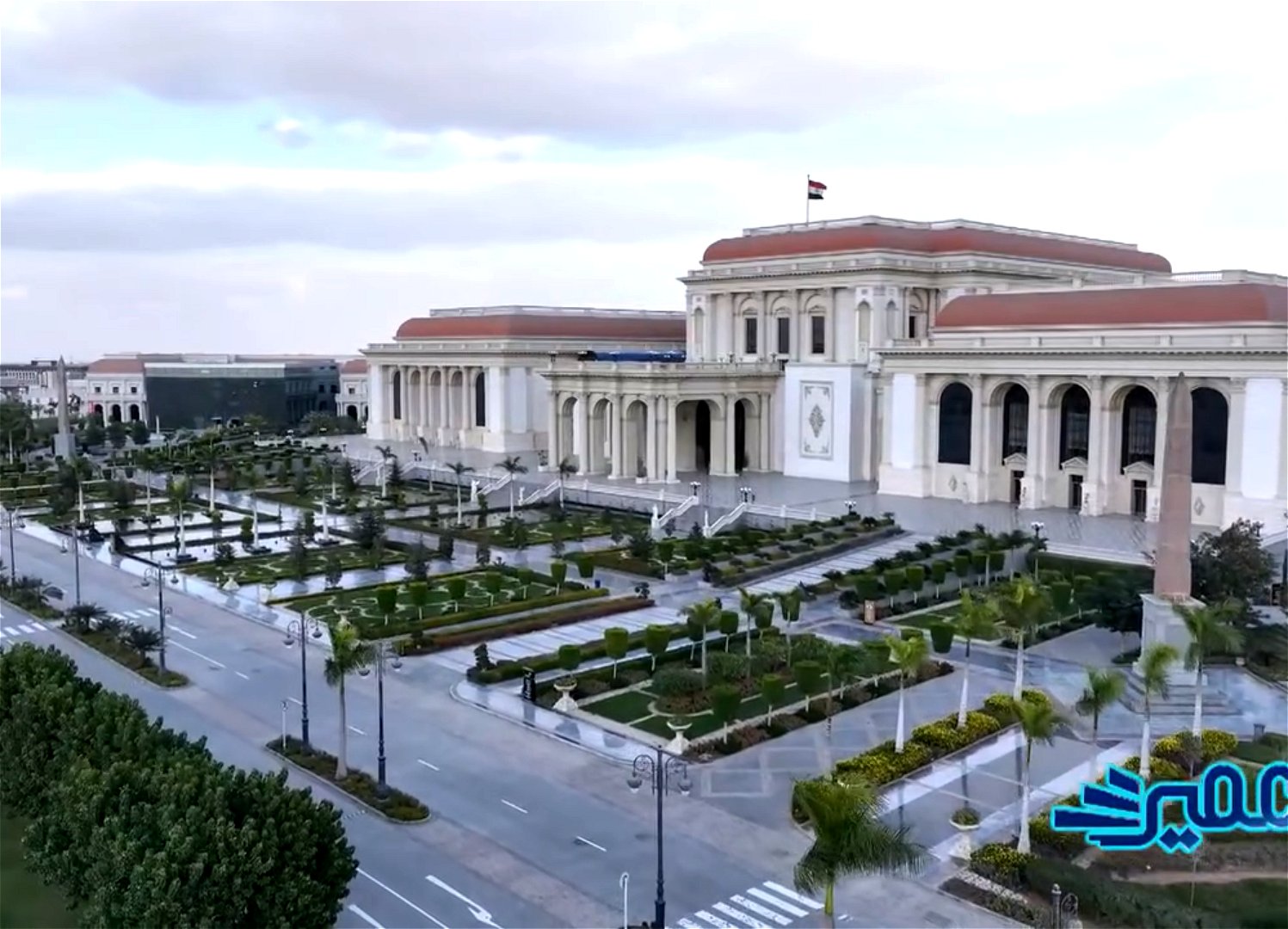 Obelisks at both ends of the opera house. The one on the left is barely visible. By January 2025, a wall had been erected along the road. |
The opera house is a magnificent building extending approximately 500 metres from north to south. Promotional videos of the City of Art and Culture show obelisks at both ends. On the basis of information obtained before my visit, I initially thought that both were Ramses II obelisks: one brought from San el-Hagar (Tanis), and the other formerly standing in front of Cairo International Airport.
How to get there:
I travelled in a private car arranged by a travel agency, but the site can also be reached by rail. From central Cairo, take Metro Line 3 (the Green Line) to its terminus at Adly Mansour, then change to the Light Rail Transit (LRT), which opened in 2022. The terminal station is Arts and Culture City, immediately east of the opera house.
Photographs give the impression of an open complex facing the road. In January 2025, however, a high wall stood between the road and the opera house grounds. I could neither see inside the grounds nor approach the buildings. Since the LRT station is elevated, it may be possible to see the obelisks over the wall from there. Although “take the metro and transfer to the LRT” sounds straightforward, my research suggested that the journey from Sadat station in central Cairo to Arts and Culture City station would take nearly two hours each way. At a distance of more than 40 km, even a chartered car does not necessarily save much time. This is not an easy excursion.
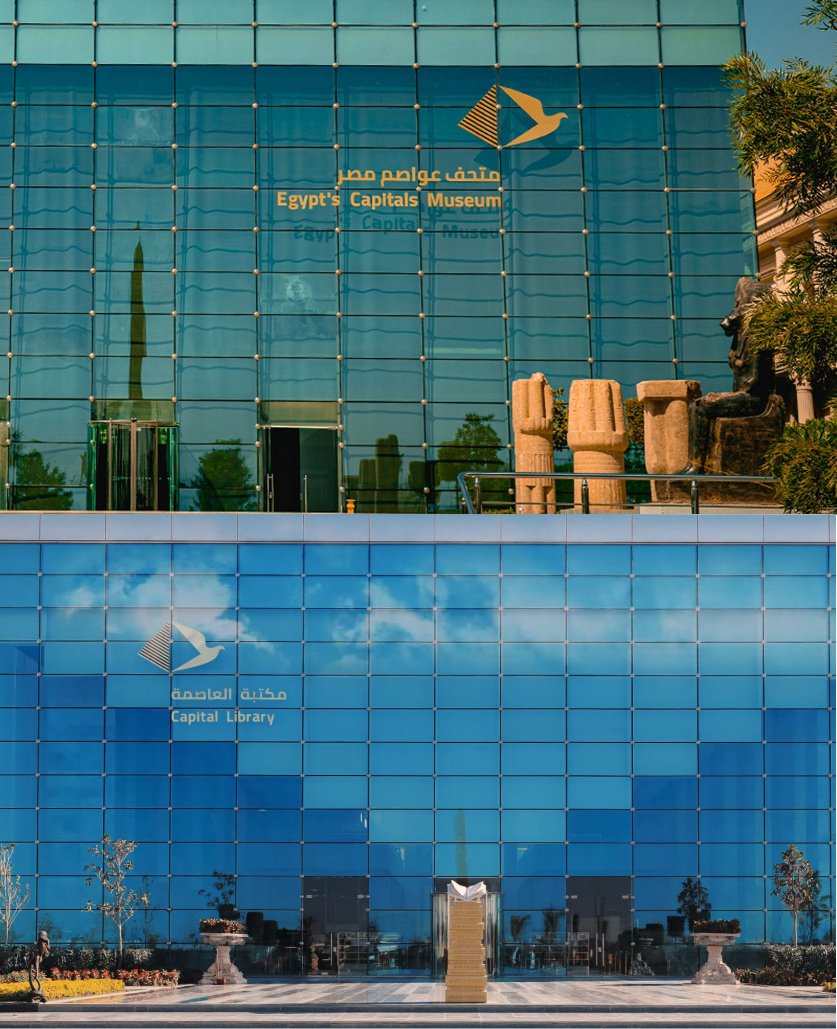 The Capital Museum (top) and Capital Library (bottom). Their exteriors are almost identical; the logos are the easiest way to tell them apart. |
About the obelisks:
When I visited in January 2025, the area around the opera house was walled off and entry was prohibited. It was therefore almost impossible to photograph the obelisks myself. However, a few images can be found in government promotional videos and news reports about the New Administrative Capital. Even then, identifying whether an obelisk shown in a video stands in front of the museum on the right or the library on the left is surprisingly difficult. The buildings have nearly identical exteriors and can be distinguished mainly by their logos and objects placed in front of them.
● The obelisk to the right of the opera house
The Capital Museum is on the right (north) side of the opera house. In one photograph I managed to take over the wall, inscriptions on one face of the obelisk standing before the museum are clearly visible. Its general shape resembles the obelisk formerly at Cairo Airport, so I compared the inscriptions with my photographs of all four faces of that obelisk. They appear different enough for me to conclude that it is not the airport obelisk. A promotional video of the City of Art and Culture also shows the museum-side obelisk. Although the inscriptions cannot be read clearly, joints show that it was reconstructed from five large blocks—another feature quite unlike the obelisk formerly at Cairo Airport.
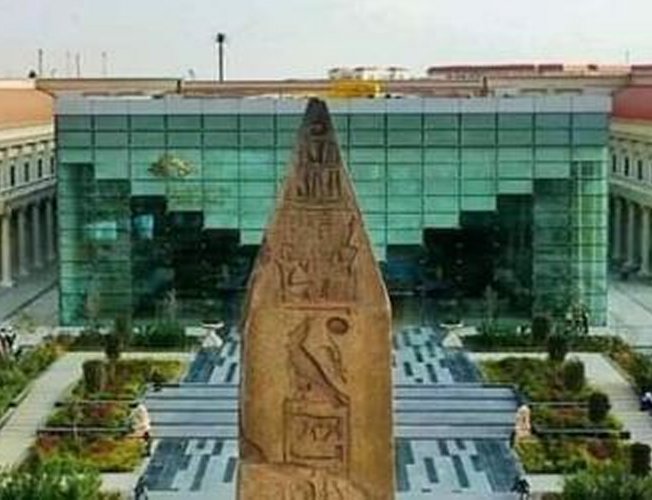 Upper portion of the obelisk on the left |
● The obelisk to the left of the opera house
The Capital Library stands on the left (south) side of the opera house, and another obelisk stands in front of it. Because of the wall, I could not photograph this obelisk at all. I had to rely on promotional videos of the library and photographs posted by visitors. One video included drone footage approaching the library by passing over the top of the obelisk. Although the image is not particularly sharp, it shows that the relief carving on the upper section is fairly deep and well preserved. By contrast, the tip of the airport obelisk was damaged and had been given a metal cap to restore its outline. This is a clear distinguishing feature.
Thus, the available images indicate that neither of the two obelisks beside the opera house is the one removed from Cairo Airport. So where did that airport obelisk go? I found a report on the Egyptian newspaper Youm7 website (in Arabic) stating that the obelisk was removed in mid-August 2022 and would be transferred to and stored at the Grand Egyptian Museum (GEM). However, it is not clear whether the report confused this move with the erection of a different obelisk in front of GEM. One is left wondering why an obelisk about 17 metres tall would be kept in storage rather than displayed, but I found no published explanation.
Photographic notes:
I was disappointed to find high walls in place of the open scenery shown in the advance publicity for the City of Art and Culture. In principle, the central government ministries are to be relocated from Cairo to the New Administrative Capital, but during my January 2025 visit I saw very few people other than construction workers. The buildings were certainly there, but the rail journey from central Cairo took nearly two hours, and public transportation within the new city, including buses, was not yet well developed. There were no shops in the area I saw. Apartment complexes had been built, yet there was little sign of residents. I felt it would be difficult for this place to function as a city within a few years without effectively requiring civil servants to move and strongly encouraging the provision of shops and other essential services. I plan to return in 2027; I wonder how much will have changed by then.
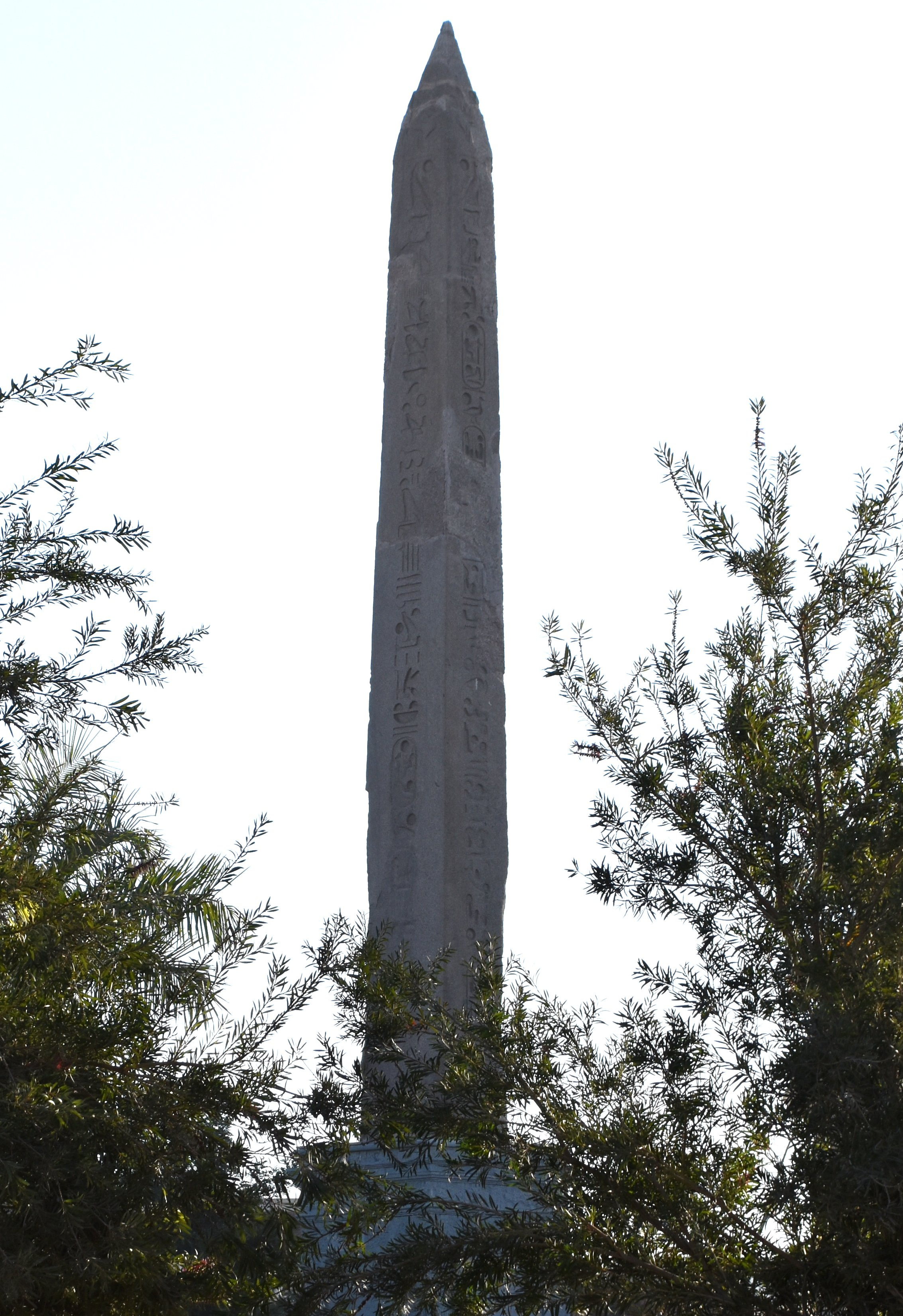
North-side obelisk (Photo 1) |
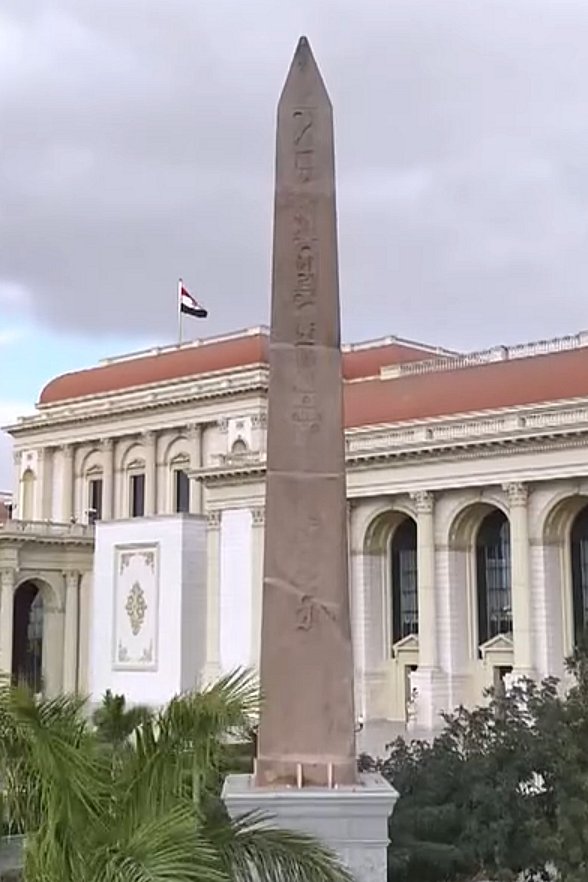 North-side obelisk (Photo 2) |
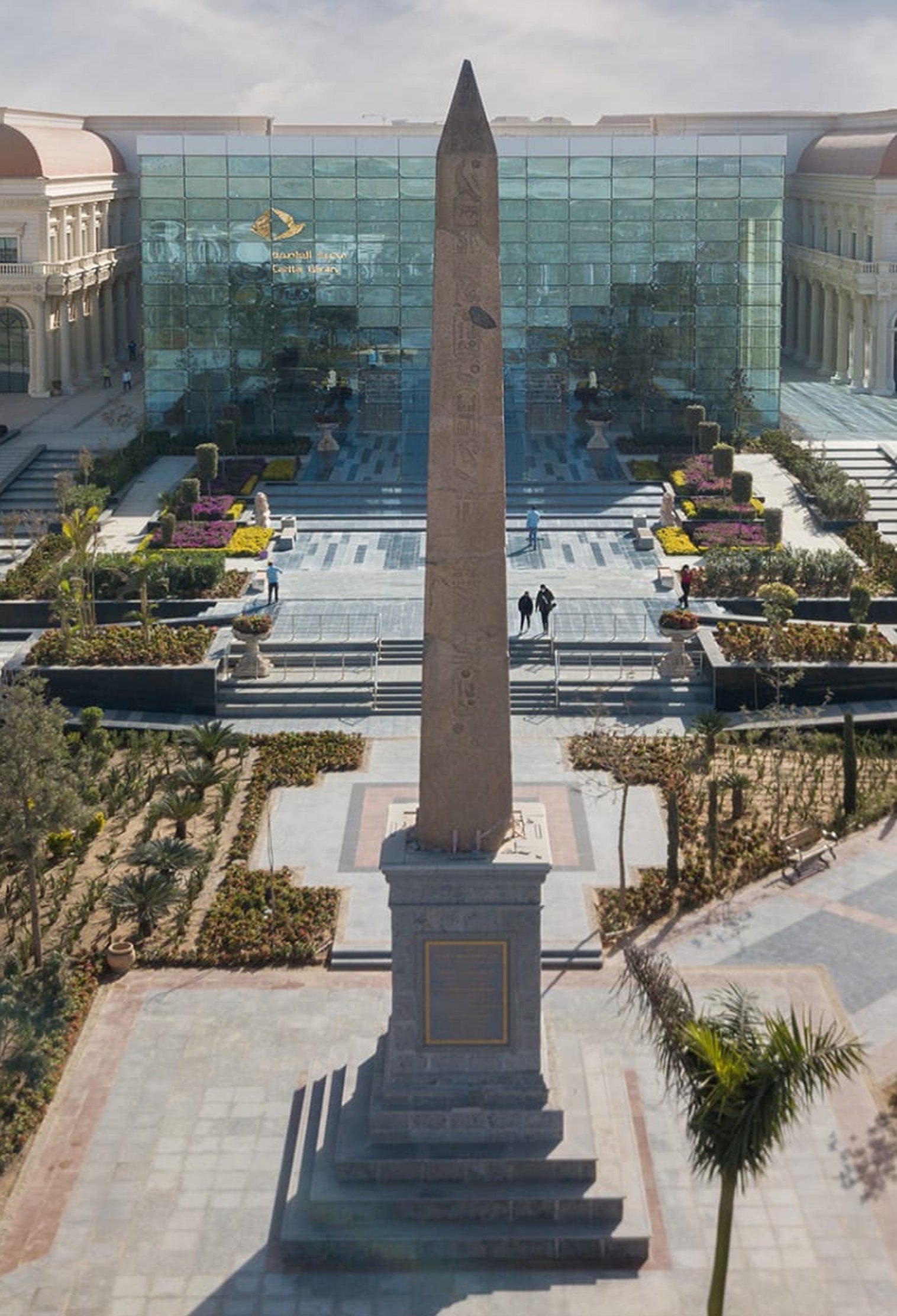 South-side obelisk (Photo 3) |
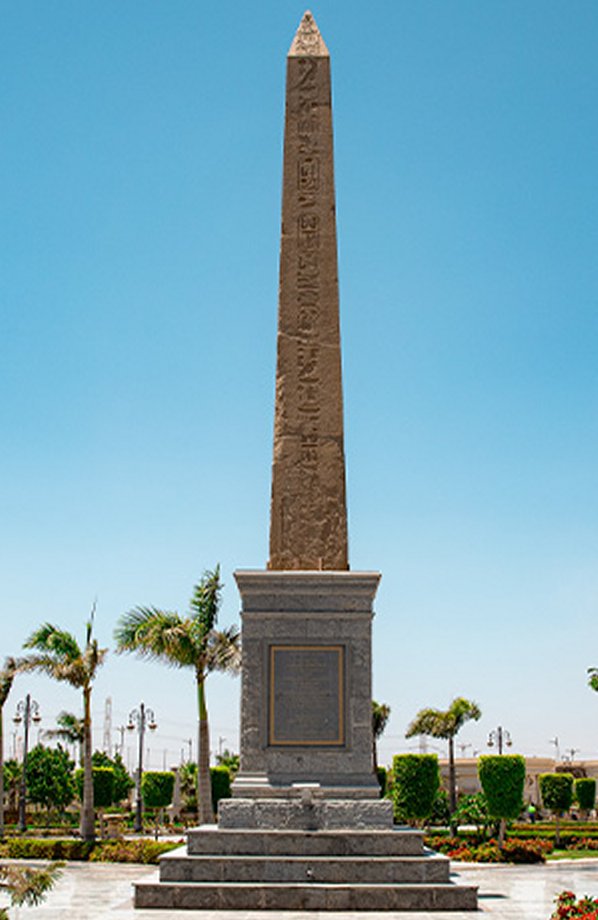 South-side obelisk (Photo 4) |
|||
Photo 1 taken on January 12, 2025 by Hiroyuki Nagase (click an image to view it in high resolution).
| ||||||
Text and editing: Hiroyuki Nagase nagase@obelisks.org, Shoji Okamoto okamaoto@obelisks.org
 indicates a railway station