
|
The Obelisk in Tahrir Square
|
|
|
| Location: | Tahrir Square, Cairo, Egypt Latitude 30°02′40.1″(30.044472) Longitude 31°14′08.6″(31.235722) |
| Original pharaoh: | Ramses II (19th Dynasty, New Kingdom; reigned in the 13th century BC) |
| Height: | Approximately 19 m (some reports give 17 m) |
| Material: | Red granite |
About Tahrir Square:
Tahrir Square stands in the heart of Cairo, near the Egyptian Museum. The Arabic word tahrir means “liberation”; the square was given its present name in connection with the Egyptian Revolution of 1952. Previously, it had been known as Ismailia Square. During the 2011 Arab Spring, it became the scene of huge demonstrations against the government of Hosni Mubarak and attracted worldwide attention. In February 2020, an obelisk of Ramses II, formerly lying broken into fragments among the ruins of San el-Hagar (Tanis), was reassembled and erected here. This is a record of my visit on January 12, 2025.
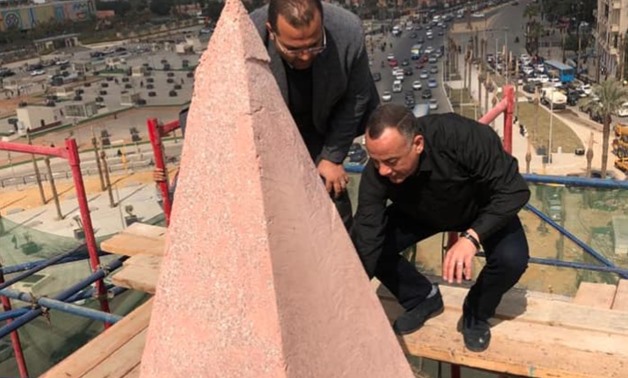 Mostafa Waziri, then Secretary-General of Egypt’s Supreme Council of Antiquities, inspecting the reconstruction (Egypt Today, February 18, 2020). |
Getting there:
Tahrir Square is such a central landmark in Cairo that it is more often used as a starting point for directions than as a destination requiring directions of its own. It is immediately beside Sadat station, an interchange between Lines 1 and 2 of the Cairo Metro. The square is roughly circular and not especially large, with a traffic roundabout surrounding it. There are traffic lights nearby, but none controlling the roundabout itself, where cars move almost continuously. Take particular care when crossing to the obelisk in the center. If you wait, there will eventually be a gap in the traffic. In my experience, walking slowly and steadily, without rushing, makes one's movements more predictable to drivers, even though they may not visibly slow down. Suddenly changing direction or running can be more dangerous because drivers may be taken by surprise. Ordinarily, crossing a Cairo street together with local pedestrians is a sensible practice, but very few people cross this roundabout specifically to visit the obelisk. Police officers and soldiers stand guard around the monument. On my visit, indicating my camera and explaining that I wished to take photographs did not result in a prohibition. Their job, however, is to guard the obelisk, not to direct traffic on the roundabout.
About the obelisk:
News reports document how this obelisk of Ramses II was removed from the ruins of San el-Hagar, restored “near Cairo,” and erected in Tahrir Square. A September 5, 2019 report in Ahram Online stated that fragments comprising eight large blocks arrived in Cairo at the beginning of September and that restoration work had begun. Next, Egypt Today, February 2, 2020, reported on construction involving the obelisk's lowest foundation section. According to that report, Mostafa Waziri, then Secretary-General of the Supreme Council of Antiquities, said the transfer was approved by the Permanent Committee of Egyptian Antiquities and carried out under tight Tourism and Antiquities Police security, as part of a government plan to redevelop Tahrir Square into another of Cairo's archaeological and tourist attractions. The same article gives August 29, 2019 as the date the base was moved. The February 2 article includes construction photographs, yet by February 18 the obelisk had already been erected and Waziri had inspected it. I cannot tell whether the work was completed extraordinarily quickly or whether the photographs in the February 2 article were taken earlier.
The photographs below were taken by me in midwinter, on January 12. The sun was relatively low, so I had difficulty photographing the backlit faces. The west and south faces, however, are clear enough to show that the surviving ancient fragments comprise only part of the structure; much of it is restored material. I suspect that the lowest stone is the section described as the “base” in the news report. Comparing these images with photographs I took at San el-Hagar in 2014 and 2018, I have not yet identified any fragment with certainty.
Looking at these photographs again, I also wonder why the joints and repaired areas were left so conspicuously visible. A mortar color closer to that of the original fragments might have avoided the impression of a patchwork construction. On the other hand, restored pottery in museums is sometimes deliberately treated so that the modern repairs remain readily distinguishable from the original object. Perhaps the conspicuous repairs here likewise reflect a principle of archaeological conservation.
The four ram-headed sphinxes surrounding the obelisk's pedestal were relocated from the entrance to the Karnak Temple complex in Luxor. Some Egyptian archaeologists brought a legal challenge against the move, arguing that placing the four sandstone sphinxes in Cairo's Tahrir Square would expose them to extreme heat and air pollution, but the transfer went ahead (The Guardian, May 7, 2020).
Photography notes:
The construction of the Tahrir Square obelisk was repeatedly covered in the news. It was particularly prominent during the April 2021 “Pharaohs' Golden Parade,” when 22 royal mummies were transferred from the Egyptian Museum to the newly established National Museum of Egyptian Civilization; the procession passed beside the obelisk. Several readers asked me why it had not yet been included on this website, and I regretted the omission. At the time, however, travel was impossible because of the COVID-19 pandemic. Afterwards, repeated postponements of the Grand Egyptian Museum (GEM) opening made it difficult to choose a time to travel. In January 2025 GEM was still in its pre-opening phase, but its entrance obelisk had become accessible for photography. I therefore decided to visit Egypt and was finally able to update this website.
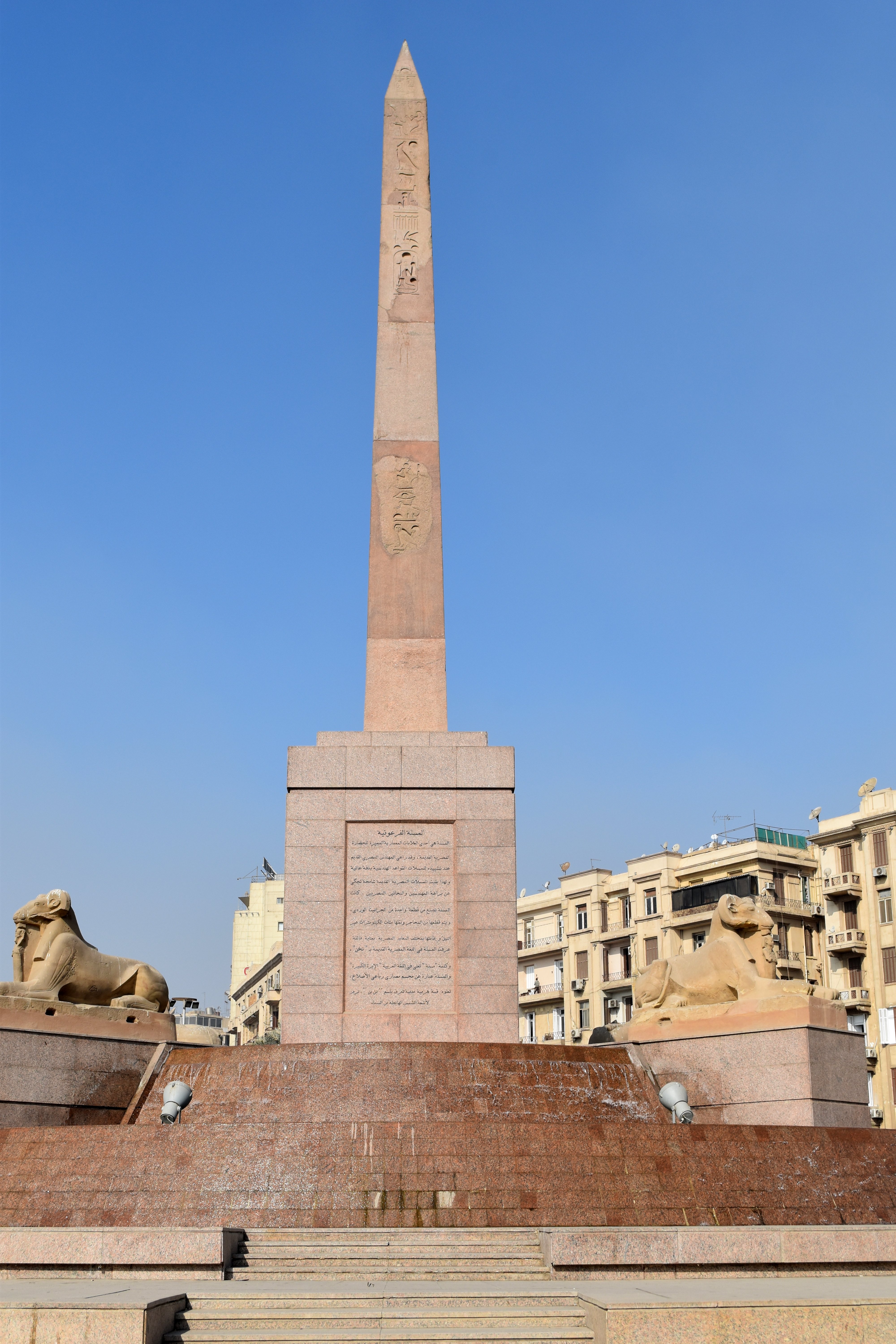 West face |
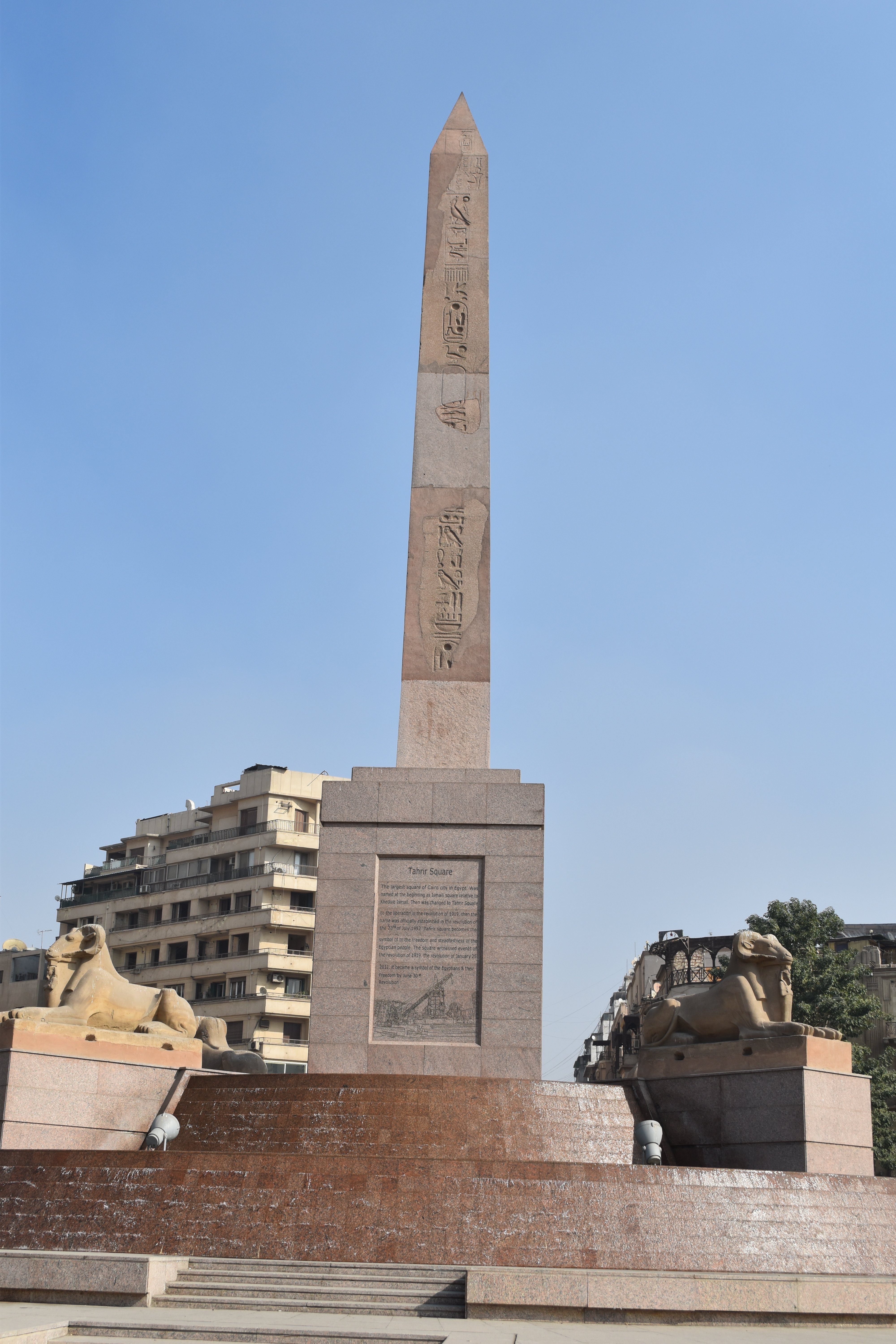 South face |
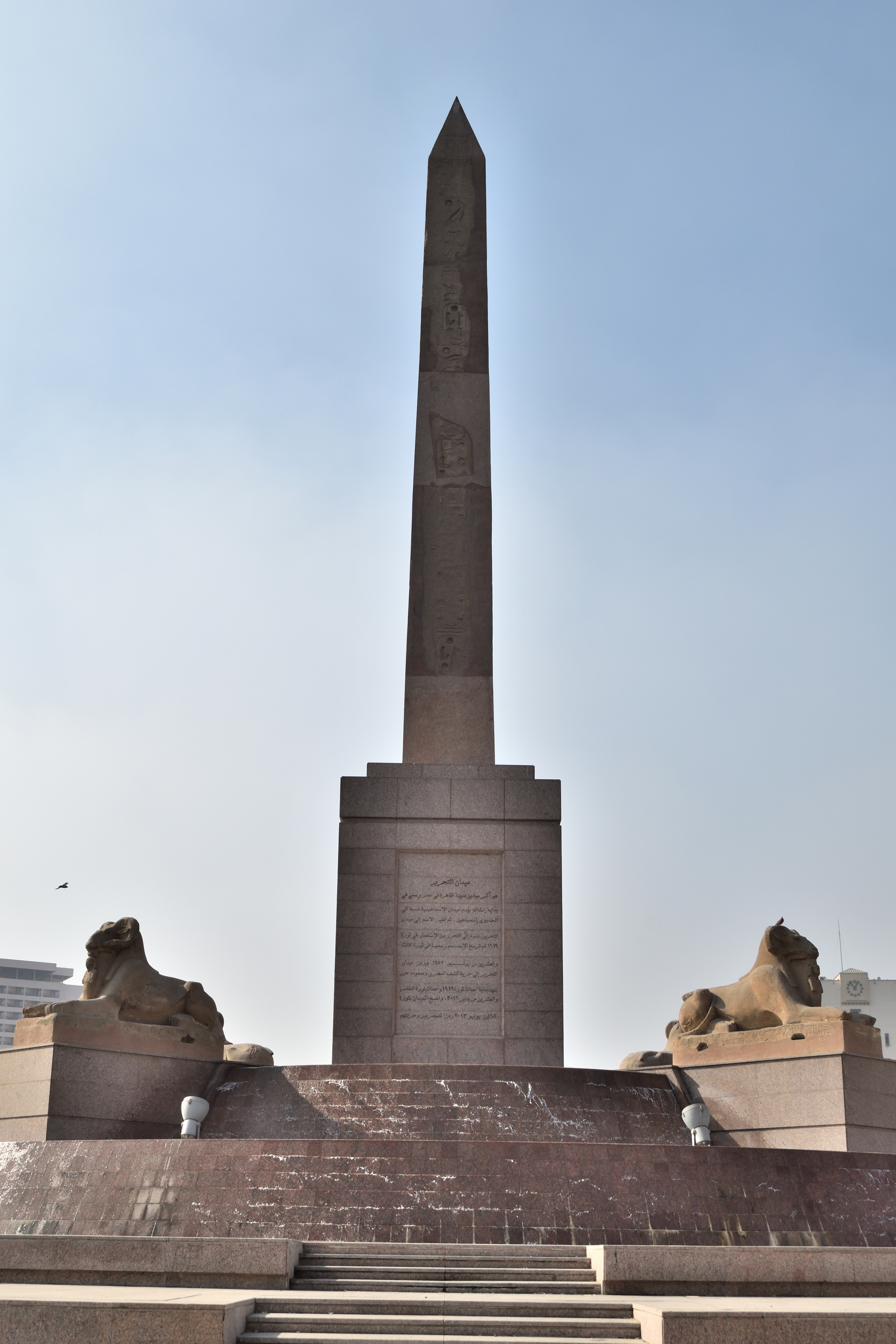 East face |
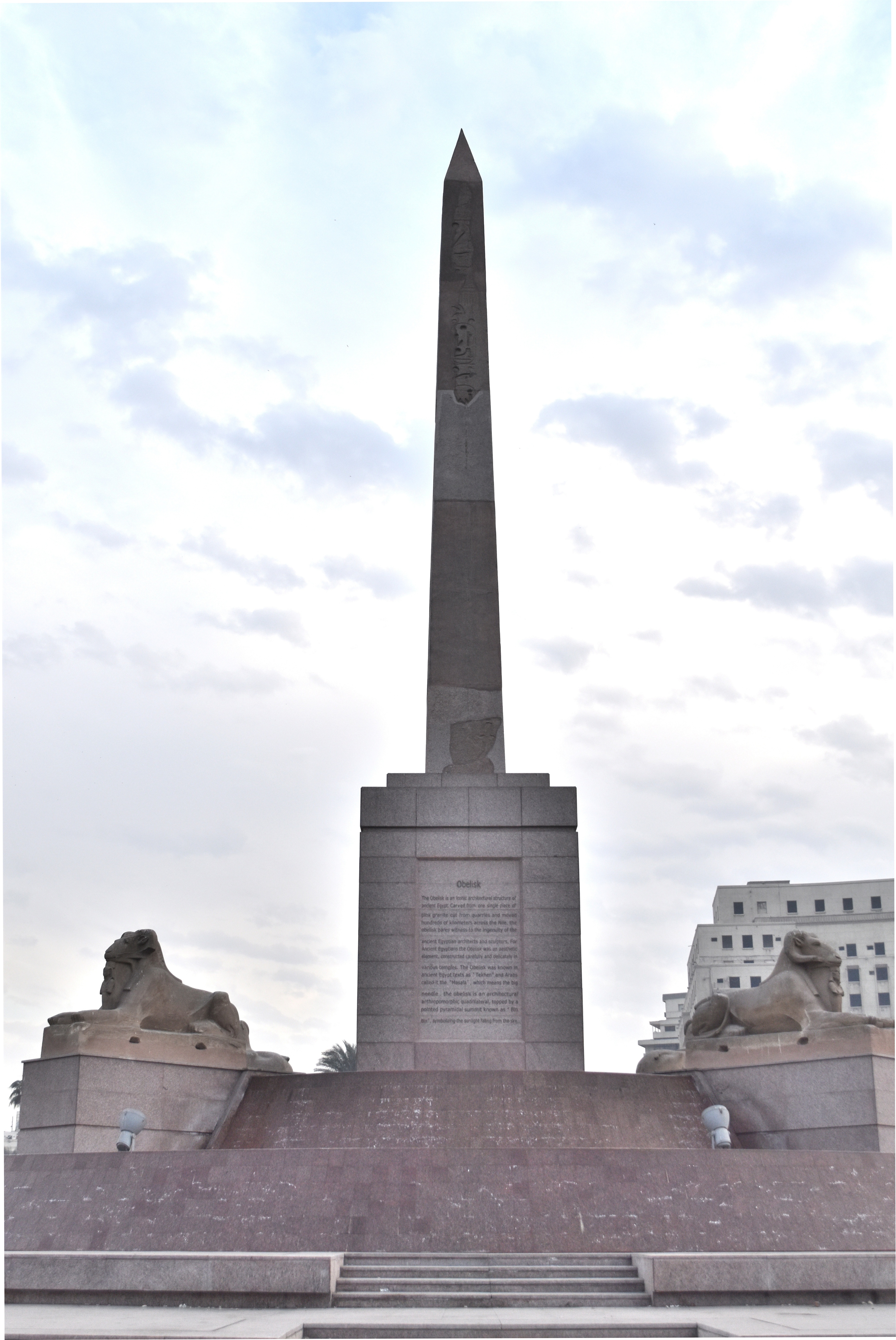 North face |
|||
Photographed by Hiroyuki Nagase on January 12, 2025 (click each image to view its full-resolution version) | ||||||
Co-authored and edited by Hiroyuki Nagase nagase@obelisks.org, and Shoji Okamoto okamoto@obelisks.org
 indicates a metro station