日本語ページ
ラテランオベリスク

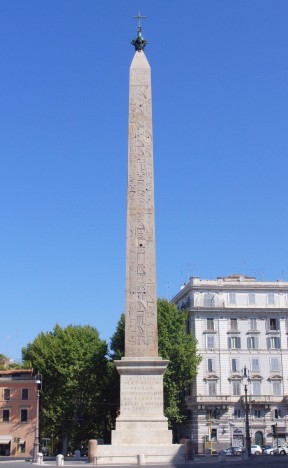
The Lateran Obelisk in Rome, the tallest surviving ancient obelisk

A field guide to ancient obelisks around the world

Introduction

Many people are familiar with the obelisks standing in famous squares, such as Place de la Concorde in Paris and St. Peter’s Square in Vatican City. Because many obelisks in Egypt remain fallen or in fragments, it is sometimes said that very few survive in Egypt while many were taken abroad. This is not the whole story. Beyond the well-known standing monuments, many smaller obelisks and fragments survive in museum courtyards, galleries, and archaeological sites.

Since 2013, I have traveled to Egypt and other countries to locate these obelisks, examine them in person, and photograph their inscriptions and surroundings. This website records those visits.

Ten years after launching this site in 2016, I have substantially updated it, primarily to make it easier to use on smartphones. My return to Egypt in 2025 also revealed major changes since 2017. The entries for Tanis and relocated obelisks have been updated; earlier versions covering the Cairo Airport and Gezira Island locations are retained in the archive below.

▼ About this website

Overview: Ancient obelisks and their fragments are found in museums and archaeological sites as well as in famous public squares. This site records my visits and photographs since 2013.


Launched in 2016 and substantially redesigned in 2026 for mobile devices, with updates following fieldwork in Egypt in 2025. Earlier records of relocated obelisks are preserved.

Read more about the scope and research approach ▼


List of Obelisk Locations

Country Number Present site Pharaoh, commonly known name, notes
Egypt
35
Karnak Great Temple of Amun, Karnak †† Tuthmosis I Obelisk
Queen Hatshepsut Obelisk
Seti II Obelisk
Luxor Temple, Luxor †† Ramses II Obelisk
Luxor Museum, Luxor † Ramses III Obelisk (Indoor Exhibition)
Tahrir Square, Cairo † Ramses II Obelisk
Egyptian Museum, Cairo † Queen Hatshepsut Obelisk (Pyramidion alone)
Ramses II Obelisk (top only)
Ramses IV Obelisk (fragment)
Tuthmosis III Obelisk (fragment)
Obelisk removed the Name of Pharaoh (fragment)
Nectanebo II Obelisk (fragment) (Indoor Exhibition)
Ahmose II (Amasis) Obelisk (fragment) (Indoor Exhibition)
Ramses II Obelisk (fragment) (non-public)
In front of the Opera House, New Administrative Capital Ramses II Obelisk (not open to the public)
Ramses II Obelisk (not open to the public)
Al-Masalla area, Heliopolis Senusret I Obelisk (non-public)
Teti Obelisk (non-public)
Qesm, Faiyum Senusret I Obelisk
The ruins of Tanis, San El-Hagar Ramses II Obelisk (fragment)
Ramses II Obelisk (top & fragment)
Ramses II Obelisk (pyramidion & fragment)
In addition, Fallen Ramses II Obelisk & Many Other Fragments
Nubian Museum, Aswan † Ramses II Obelisk
Ramses II Obelisk (Indoor Exhibition)
Amenhotep II Obelisk (top only)
Tuthmosis IV Obelisk (fragment)
King Atlanersa Obelisk (fragment)
In front of the Presidential Palace, New Alamein Ramses II Obelisk (not open to the public)
Roman Amphitheater, Alexandria Seti I Obelisk (top)
Seti I Obelisk (fragment)
Italy
20
Piazza di San Giovanni in Laterano, Rome †† Lateran Obelisk, Tuthmosis III and IV
Piazza Navona, Rome † Agonalis Obelisk ‡, Roman Emperor Domitianus (Domitian)
Piazza della Rotonda (In front of Pantheon), Rome †† Macuteo Obelisk, Ramses II
Piazza della Minerva, Rome † Minerva Obelisk, Apries
Piazza Montecitorio, Rome † Montecitorio Obelisk, Psammetikos II
Piazza della Trinita dei Monti, Rome † Sallustian Obelisk ‡
Monte Pincio (Pincian Hill), Rome † Monte Pincio Obelisk ‡, Roman Emperor Hadrianus (Hadrian)
Piazza del Popolo, Rome † Flaminian Obelisk, Seti I and Ramses II
Ruin of Thermae Diocletiani, Rome † Dogali Obelisk, Ramses II
Piazza d. Esquilino, Rome †† Piazza dell'Esquilino Obelisk ‡
Piazza del Quirinale, Rome † Piazza del Quirinale Obelisk ‡
Villa Celimontana, Rome † Celimontana Obelisk (Original ancient Egyptian obelisk is upper portion only), Ramses II
Via Aurelio Saffi, Urbino † Obelisk of Urbino, Apries
Giardino di Boboli (Boboli Gardens), Firenze (Florence) †† Boboli Gardens Obelisk, Ramses II
Museo Archeologico Nazionale di Firenze, Firenze (Florence) †† Ancient Roman Obelisk ‡ (Indoor Exhibition)
Museo Civico Archeologico, Bologna † Ramses X Obelisk (Indoor Exhibition)
Museo Archeologico Nazionale di Napoli, Napoli (Naples) † Titus Sextius Africanus Obelisk (fragment) (Indoor Exhibition)
Fragment of Montecitorio Obelisk (fragment) (Indoor Exhibition)
Fragment of Lateran Obelisk (fragment) (Indoor Exhibition)
Piazza Paolo Emilio Papiniano, Benevento † Domitianus Obelisk ‡
Museo del Sannio (Samnium Museum), Benevento †† Domitianus Obelisk ‡ (fragment) (Indoor Exhibition)
Piazza del Duomo, Catania †† Elephant Fountain Obelisk
Vatican City
1
Piazza San Pietro (St. Peter's Square) †† Vatican Obelisk ‡
France
2
Place de la Concorde, Paris †† Cleopatra's Needle, Ramses II
Place de la République, Arles †† Obelisk of Arles ‡
U.K.
6
Victoria Embankment, London † Cleopatra's Needle, Tuthmosis III
British Museum, London † Queen Hatshepsut Obelisk (Indoor Exhibition)
Nectanebo II Obelisk (fragment) (Indoor Exhibition)
(Reference) In addition, some non-public collections such as the fragment of Tuthmosis III
Kingston Lacy House & Gardens, Wimborne Philae Obelisk, Ptolemy IX
Oriental Museum, Durham University, Durham † Amenhotep II Obelisk (Indoor Exhibition)
Germany
1
Staatliches Museum Aegyptischer Kunst (State Museum of Egyptian Art), München (Munich) Titus Sextius Africanus Obelisk ‡ (Indoor Exhibition)
Poland
1
Poznań Archaeological Museum, Poznań Ramses II Obelisk (Indoor Exhibition)
Turkey
1
Sultan Ahmet Park (Hippodrome), Istanbul †† Tuthmosis III Obelisk
Israel
1
Ruin of Hippodrome (Eastern Circus), Caesarea Caesarea Obelisk ‡
U.S.
2
Central Park, New York † Cleopatra's Needle, Tuthmosis III
Metropolitan Museum of Art, New York † Ptolemaic obelisk (not on public display)
Lebanon
2
National Museum of Beirut, Beirut Abi Shemou Obelisk (Indoor Exhibition)
Obelisk Temple, Biblos †† (reference)
Ruin of Hippodrome, Tyrus †† Tyrus Obelisk ‡ (Part)
Additional entries: Replicas and unfinished obelisks
Egypt
1
Agricultural Museum, Cairo † Ramses II Obelisk (replica)
Italy
1
Villa Medici, Rome † Obelisk in Villa Medici (replica)
Egypt
1
Open Air Museum, Aswan † Unfinished Obelisk
Archive of Earlier Page Versions
Egypt
2
Messalla Garden, Gezira Island, Cairo † Ramses II Obelisk (former location)
In front of Terminal 1, Cairo International Airport, Heliopolis Ramses II Obelisk (former location)
More information (scope, research approach and sources)


The Scope of the Obelisks which are included in this Website
The word "obelisk" came from the Greek "obeliskos" which means "skewer" or "spit". Ancient Greek people would have brought up the image of skewer when they looked the soaring obelisks standing in front of temples as many obelisks still remained at that time.
The obelisk-like structures were made in Ancient Roman Empire, Assyrian Empire, Ethiopia, etc. not only in Ancient Egypt.
In this site, the scope of the obelisk is, the ones are built in Ancient Egypt and its dependent territories, and Roman Empire's territories outside Egypt in Roma Empire Era.
There is no doubt that the obelisks existing in Egypt were made in Ancient Egypt. Among the existing obelisks outside Egypt, there is the one which was built in Lebanon, under the influence of Egypt in Middle Kingdom Era, the imitation which was made in Italy of Ancient Roman Empire, and the one which was built in Roman Empire's territory such as Obelisk in Caesarea. We included those obelisks in this scope. However, it's difficult to distinguish the ones "made in Ancient Egypt" and "made in Roman Empire".
In 30 B.C., Cleopatra VII killed herself and Ptolemaic Dynasty's Egypt was subverted and became a part of Roman Empire. Then in 27 B.C. the Ancient Roma has shifted to the Empire. Egypt is considered as a Roman province, but the Egypt still existed after the Roman rules were established. Also, some obelisks in Rome are, the stone material was quarried in Egypt and was made in Rome. And the ancient Egyptian hieroglyph was engraved on some Roman-made obelisks.
In fact, many books and the websites on obelisk don't distinguish "Egypt made" and "Rome made". This website also introduce the obelisks without distinguishing both.

This website will include the "Senusret I Obelisk" in Faiyum (Egypt). "Senusret I Obelisk" in Heliopolis, suburban Cairo is well-known, but the Faiyum obelisk is often excluded when the obelisks are discussed. This is probably because this has no pyramidion on top of the obelisk-like stone column.

In Ancient Egypt, the obelisks are erected, normally as a pair, at both sides of the entrance of Temple which enshrines the God of Sun. In the Middle Kingdom Era in around B.C. 2000, Amun God who was a guardian spirit of Thebes and the God of Fertility was unified with Re the God of Sun (God of Amun-Re). After that, the obelisks were also erected at the entrance of Temples for Amun, such as Karnak Great Temple of Amun.
On the other hand, many obelisks in Rome are standing in the Square (or Piazza ) or front of main churches and palaces. This is a mode after the Middle Ages. In the ancient Roman times, the obelisk was erected in front of Isis Temple or at the spina (the middle barrier of the racecourse) of amphitheater (or called as hippodrome).
For examples: Obelisk in Benevento (Domitianus Obelisk) was originally erected in front of Isis Temple. The obelisks which remain in Caesarea (Israel), in Istanbul (Turkey), and in Arles (France) are initially built in the amphitheater (hippodrome). Of course, we include those obelisks in ancient Roman Times (including in their territories)

26 obelisks remain in the "Obelisk Temple" in Biblos (Lebanon). Ancient Lebanon and Egypt traded many goods, particularly the Cedrus libani (Cedars of Lebanon) was an important product. Hence Lebanon received an influence of Egyptian Polytheism. However, "Obelisk Temple" was for the Rassap (the god professed by Canaanite and Phoenician), not Egyptian God. We introduce these mass of obelisk of the "Obelisk Temple", as a reference.

In the modern age (19 Century), some obelisks were transported to Western countries, say New York, London, Paris and other locations. Some of them are stored in the Museum. We introduce those obelisks also in this website.


The Obelisks which are excluded in this Website
We don't introduce the "obelisk-like construction" such as Assyrian Obelisk which is one of the collection of the British Museum, and the Obelisk in Axum (or Aksum) which was recently returned to Ethiopia from Italy.
Also, we don't introduce the modern "obelisk-like construction" such as Washington Monument (Washington, D.C., U.S.) and a large obelisk in Buenos Aires (Argentina), although those obelisks are included in Wikipedia.


About this Website
This website is a summary of the information and data on each obelisk worldwide, based on my visit. Also, considering the conveniences for every people, such as archaeologist on ancient Egypt, who has an interest in obelisks (so-called "obelisk fan), I tried to take as much as possible sharp photo. You can access to the original fine images. Please note that some images are processed HDR in the case of backlit situation. All photos are taken by myself, and I reserve the copyright. You may use the images, but you must state the source of the images.
Also, I indicated the direction; North, South, West and East of the obelisk. But some obelisks are not facing strictly to 4 points of the compass. In such cases, we used the 4 directions for just a descriptive purposes.
Also, considering the conveniences for every visitor of the obelisk, we provided the route to the obelisk site with Google Map which would help you how to access there.


We seek the information about the unknown obelisk
In order to create this website, I have visited many obelisks. Among them, with a clue of only one picture of obelisk, I have visited some Museum. Although the famous obelisks (mostly standing large obelisks at famous places) are filled information, but the information is often extremely few for the obelisks which remain in the ruins and/or are stored in the museums.
This fact would suggest there may be other obelisks which are not publicly known yet. If you have information on an obelisk (including fragments) of ancient Egypt and Roman Empire not listed on this website among readers of this website, I'd like to ask you to provide the information for us.

I'm explaining the things which is known generally, not simply copying from other specific websites and/or books except copyright-expired sources. With regard to the Hieroglyph of inscriptions on the obelisk, there may be my misunderstanding or wrong information. Please kindly let me know via e-mail if you spot anything suspicious.

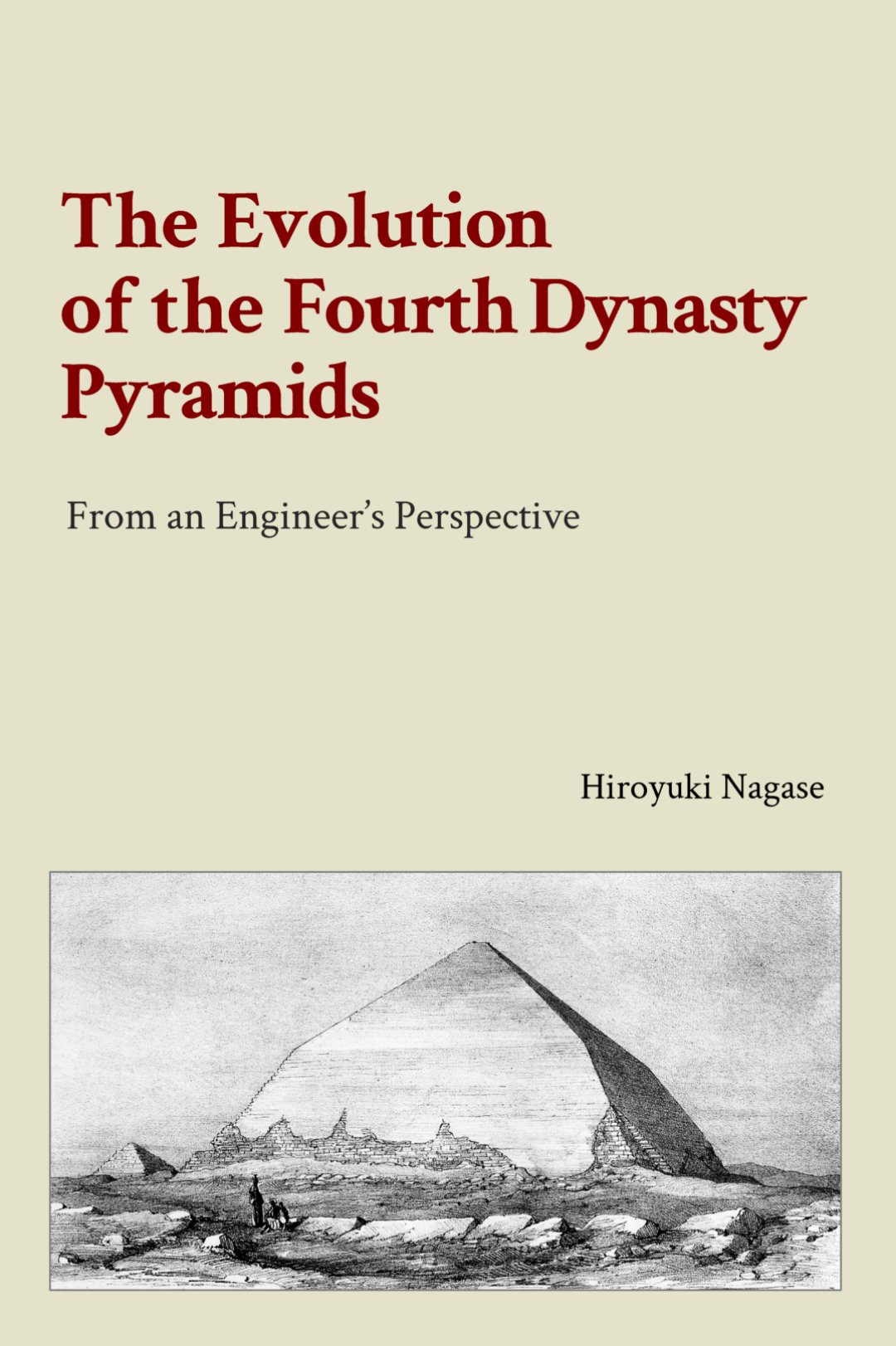
New BookNew Book — The Evolution of the Fourth Dynasty Pyramids: From an Engineer's Perspective, by Hiroyuki Nagase
Drawing on twenty years of research and the fieldwork documented on this site, this book argues that pyramid construction was, at its core, a large-scale production system — one in which throughput and sustainability, not brute force, determined what was possible. Viewed through an engineer’s eyes rather than through ritual or myth, it examines how material transport, structural load, water access, and labor logistics had to sustain a continuous output of roughly 233 blocks per day for more than two decades. Built on primary sources, including Petrie, Vyse, and the Merer papyri, it also addresses why Khufu’s pyramid may never have been formally consecrated and why the subterranean chamber aligns with the Nile’s ancient flood level.
Approx. 220 pages. Available on Amazon US, Canada, UK, Germany, France, Italy, Spain, the Netherlands, Belgium, Sweden, Poland and Japan. ISBN: 9784911207901
The complete book can also be read online at the Internet Archive.
The Evolution of the Fourth Dynasty Pyramids — Read Online